Table of Contents
- 1. Powertrain Options: 3.0T V6 Hybrid vs Plug-In Hybrid - Performance and Fuel Economy
- 2. Off-Road Hardware: Locking Differentials, Low-Range Transfer Case, and Driving Modes
- 3. Interior Luxury Comparison: Materials, Space, and Comfort vs Land Cruiser and G-Class
- 4. Export Strategy: How GWM Is Expanding the Tank Brand to Middle East, Australia, and Russia
- 5. Verdict: Can the Tank 700 Really Challenge the G-Class?
1. Powertrain Options: 3.0T V6 Hybrid vs Plug-In Hybrid - Performance and Fuel Economy
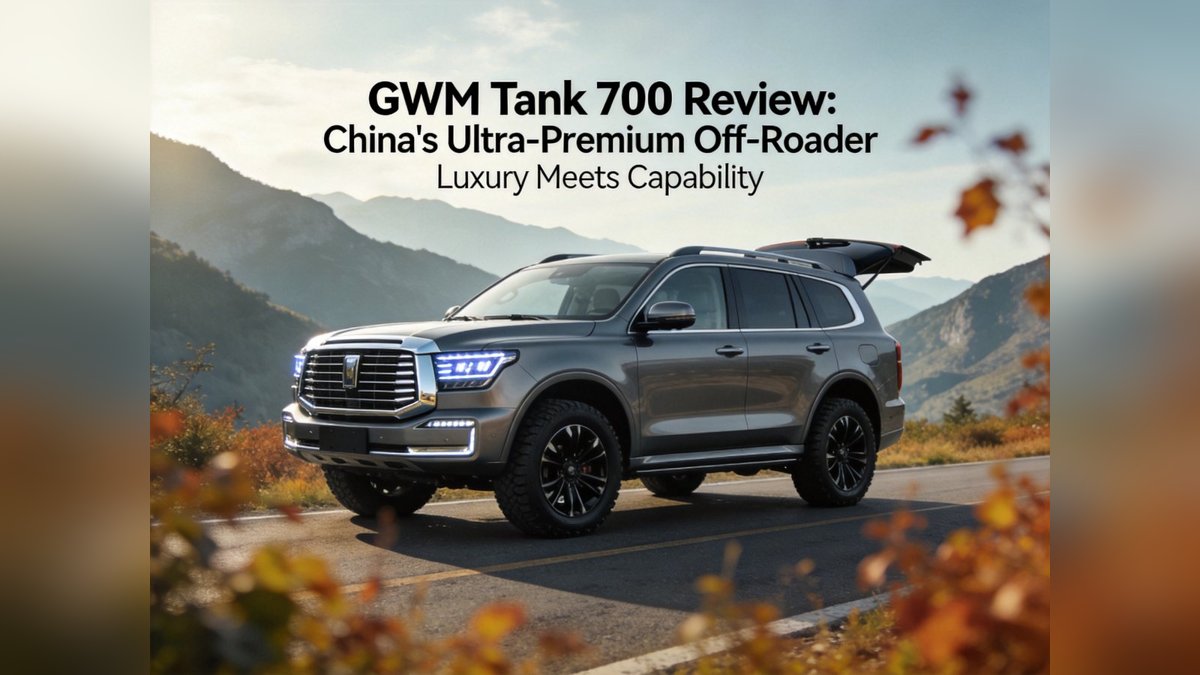
The GWM Tank 700 offers two distinct powertrain choices, both built around a 3.0-liter twin-turbocharged V6 engine. The base hybrid variant combines this engine with a 48-volt mild-hybrid system, delivering 354 horsepower and 369 lb-ft of torque. This setup prioritizes smooth, linear power delivery for daily driving and highway cruising, while the mild-hybrid system recovers energy during braking to improve fuel economy by approximately 8-10% compared to a conventional V6. Official combined fuel consumption stands at 11.2 L/100 km (21 mpg) in mixed driving, a respectable figure for a full-size SUV weighing over 2,700 kg.
The plug-in hybrid (PHEV) variant takes performance further. It pairs the same 3.0T V6 with a larger electric motor and a 37.5 kWh battery pack, producing a combined 510 horsepower and 553 lb-ft of torque. This enables a 0-60 mph sprint in just 5.2 seconds, putting it on par with the Mercedes-AMG G63. The electric-only range is rated at 62 miles (100 km) under China's CLTC cycle, allowing most daily commutes to be completed without burning a drop of gasoline. When the battery is depleted, the V6 operates as a range extender, with combined fuel economy dropping to around 8.5 L/100 km (27.7 mpg) in hybrid mode. Both powertrains are mated to a 9-speed automatic transmission with a torque converter, providing smooth shifts and robust low-end torque for off-road crawling.
Key Stat: The Tank 700 PHEV's 510 hp and 553 lb-ft torque match the Mercedes-AMG G63's output, yet it achieves 62 miles of electric-only range -- a feat no G-Class can claim.
2. Off-Road Hardware: Locking Differentials, Low-Range Transfer Case, and Driving Modes
GWM designed the Tank 700 with serious off-road capability in mind. Standard equipment includes a two-speed transfer case with a low-range gear reduction (2.48:1 ratio), enabling a crawl ratio of 48.1:1 for precise low-speed rock crawling. Front and rear electronic locking differentials are standard, allowing the driver to lock both axles for maximum traction on loose surfaces like sand, mud, or snow. The suspension uses a double-wishbone front and multi-link rear setup with adaptive dampers that adjust stiffness based on terrain and driving mode.
The Tank 700 offers seven selectable off-road driving modes: Auto, Sand, Mud, Rock, Snow, Sport, and Eco. Each mode adjusts throttle response, transmission shift points, differential lock engagement, and stability control intervention. In Rock mode, the system automatically locks both diffs and engages low range, while the hill descent control maintains a set speed between 2-12 mph without driver input. Ground clearance is 9.8 inches (250 mm), with approach and departure angles of 32 degrees and 28 degrees respectively -- figures that rival the Land Cruiser 300 and G-Class. Wading depth is rated at 31.5 inches (800 mm), sufficient for crossing shallow rivers or flooded trails.
3. Interior Luxury Comparison: Materials, Space, and Comfort vs Land Cruiser and G-Class
Step inside the Tank 700, and the first impression is one of opulence that challenges the Mercedes G-Class and Toyota Land Cruiser. The cabin is swathed in Nappa leather with diamond-stitched quilting on the seats, door panels, and dashboard. Real wood veneers (open-pore walnut) and brushed aluminum accents adorn the center console and steering wheel. The front seats offer 12-way power adjustment, heating, ventilation, and massage functions -- a feature typically reserved for luxury sedans like the S-Class. Rear passengers enjoy executive-style reclining seats with a center armrest that houses a touchscreen for climate and entertainment controls.
Space is generous: the Tank 700 measures 5,090 mm (200.4 inches) in length with a 3,000 mm (118.1 inches) wheelbase, providing ample legroom for five adults. Cargo volume behind the second row is 32.5 cubic feet, expanding to 68.7 cubic feet with the seats folded. By comparison, the G-Class offers 27.5 cubic feet behind the second row, while the Land Cruiser provides 31.0 cubic feet. The Tank 700 also features a panoramic sunroof, a 16-speaker Infinity premium audio system, and a 12.3-inch digital instrument cluster paired with a 14.6-inch infotainment touchscreen running GWM's latest OS with wireless Apple CarPlay and Android Auto. Build quality is impressive, with tight panel gaps and soft-touch materials throughout -- a clear step above the Land Cruiser's more utilitarian interior and approaching the G-Class's handcrafted feel.
4. Export Strategy: How GWM Is Expanding the Tank Brand to Middle East, Australia, and Russia
GWM (Great Wall Motors) has aggressive plans to take the Tank brand global, with the Tank 700 as its flagship. The Middle East is a primary target, given the region's appetite for large, powerful SUVs and its established off-road culture. GWM has already opened a regional headquarters in Dubai and is building a network of 50 dealerships across the UAE, Saudi Arabia, and Kuwait by the end of 2026. The Tank 700's desert-ready credentials -- high ground clearance, locking diffs, and robust cooling system for extreme heat -- make it a natural fit for the Arabian Peninsula.
Australia is another key market, where the Tank 300 and Tank 500 have already gained traction. The Tank 700 will compete directly with the Toyota Land Cruiser 300 Series and Nissan Patrol, both dominant in the Australian outback. GWM plans to offer the PHEV variant in Australia to capitalize on the country's growing EV infrastructure and tax incentives for plug-in hybrids. Russia, where GWM already has a manufacturing plant in Tula, will produce the Tank 700 locally to avoid import tariffs and cater to the demand for rugged, luxury SUVs in Siberia and the Far East. By 2027, GWM aims to sell 50,000 Tank 700 units annually across these three regions, positioning the model as a credible alternative to established German and Japanese rivals.
5. Verdict: Can the Tank 700 Really Challenge the G-Class?
The GWM Tank 700 is a compelling proposition for buyers seeking a full-size luxury off-road SUV without the six-figure price tag of a Mercedes G-Class. With a starting price around $65,000 in China (estimated $75,000-85,000 for export markets), it undercuts the G-Class by more than $100,000 while offering comparable power, superior electric range, and a more spacious interior. Off-road capability is genuine, with hardware that matches or exceeds the Land Cruiser's. The interior luxury is impressive for the price, though it lacks the G-Class's heritage and brand cachet.
Potential drawbacks include GWM's limited service network in some export markets, the brand's relatively low resale value compared to Toyota or Mercedes, and the PHEV's complexity for remote-area repairs. However, for the buyer who values substance over status, the Tank 700 delivers a unique blend of luxury, off-road prowess, and electrified efficiency that no competitor currently offers at this price point. It's not a G-Class killer, but it's a serious alternative that deserves a test drive.
Who Should Buy This
This category of vehicles is best suited for drivers who prioritize the specific strengths highlighted in this review. If you value the particular combination of features, performance, and price that these options offer, any of the top choices will serve you well. However, if your priorities differ significantly from the criteria used in this evaluation, you may be better served by looking at alternatives in a different segment or price range. The most important thing is to honestly assess your own needs rather than being swayed by impressive specifications that may not translate to real-world benefits in your daily driving routine.
Bottom Line
The automotive market in 2026 offers more choice and better value than ever before, with vehicles in nearly every segment delivering impressive levels of performance, technology, and efficiency. Whether you are shopping for a budget-friendly commuter, a family SUV, or a high-performance sports car, there has never been a better time to be in the market. Use the information in this guide as a starting point for your own research, and always verify specifications and pricing with local dealers, as availability and incentives vary by region. A well-informed buyer is the most likely to be a satisfied owner.
Questions to Ask Before Making a Decision
Before finalizing your approach to the topic covered in this guide, consider a few key questions that will help you apply this information effectively. What is your primary goal, saving money, improving safety, increasing performance, or extending vehicle life? Understanding your priority helps you focus on the advice that matters most for your situation. What is your budget for any associated parts, tools, or professional services? Some recommendations may require an initial investment that pays for itself over time through reduced maintenance costs or improved fuel efficiency. What is your skill level and available time? Be honest about whether you can realistically perform the recommended tasks yourself or whether professional service is a better use of your time and provides better results. Answering these questions before taking action ensures you get the maximum benefit from the information presented here and avoid common mistakes that come from rushing into decisions without proper planning.
Additionally, consider consulting with a trusted mechanic or automotive professional who can provide personalized advice based on your specific vehicle make, model, and condition. While general guides like this one provide a solid foundation of knowledge, every vehicle has unique characteristics and potential issues that a professional who works on your specific model regularly can identify. Building a relationship with a reputable mechanic who communicates clearly and charges fair prices is one of the most valuable investments any car owner can make. If you do not already have a trusted mechanic, ask friends, family, or local community groups for recommendations, and visit a shop to observe their professionalism and cleanliness before committing to their services.