Table of Contents
- Design Philosophy: How Rolls-Royce Translated Its Iconic Proportions into an SUV
- Interior Craftsmanship: Hand-Stitched Leather, Starlight Headliner, and Bespoke Wood Veneers
- Under the Hood: V12 Power, Air Suspension with Road-Scanning Cameras, and Genuine Off-Road Capability
- Owning a Cullinan: Depreciation Patterns, Maintenance Costs, and the Ultra-Luxury Ownership Experience
Design Philosophy: How Rolls-Royce Translated Its Iconic Proportions into an SUV
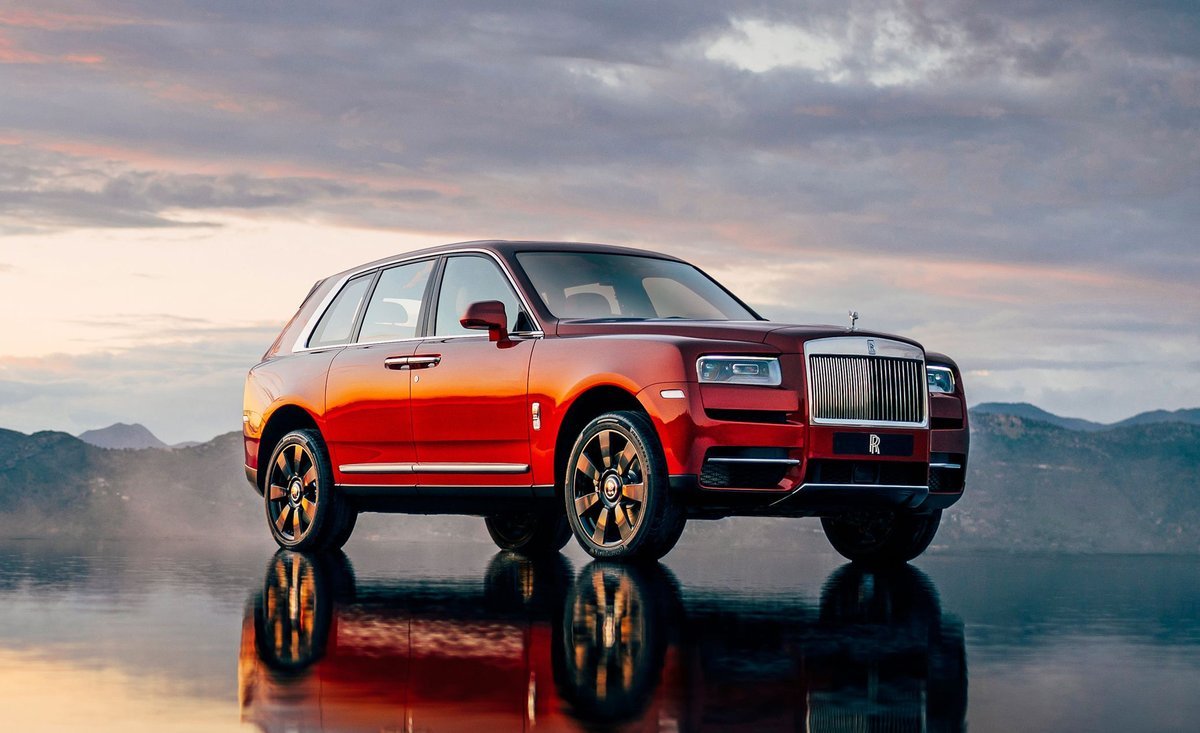
The Rolls-Royce Cullinan represents a seismic shift for the British marque. For the first time in its 118-year history, Rolls-Royce built a vehicle designed to leave paved roads. Yet the Cullinan doesn't look like a traditional SUV. Its design language is unmistakably Rolls-Royce, starting with the commanding front end dominated by the Pantheon grille. This grille, hand-polished and flanked by laser-cut LED headlights, sits higher than on any other Rolls-Royce model, giving the Cullinan a presence that demands attention from every angle.
The proportions are deliberately upright and formal. The Cullinan measures 5,341 mm long, 2,164 mm wide, and 1,835 mm tall, with a wheelbase of 3,295 mm. That wheelbase is nearly identical to the Phantom's, creating a cabin that feels impossibly spacious. The rear doors are rear-hinged suicide doors, a Rolls-Royce hallmark, which open to a 90-degree angle for effortless entry. The beltline is high, the windows narrow, and the rear tailgate is split -- a lower section that folds down for tailgate seating and an upper section that opens conventionally.
Every body panel is sculpted by hand at the Goodwood factory. The paint alone can take up to 12 coats and 150 hours of labor. The Cullinan rides on 22-inch wheels as standard, with optional 23-inch forged alloys. The overall shape is more shooting brake than traditional SUV, with a tapered roofline that preserves the brand's signature coach-door silhouette. This is not a vehicle designed to blend in -- it's designed to dominate.
Key Stat: The Cullinan's Pantheon grille is the tallest ever fitted to a Rolls-Royce, standing 3 inches taller than the Phantom's, ensuring the SUV's front end maintains the brand's commanding road presence.
Interior Craftsmanship: Hand-Stitched Leather, Starlight Headliner, and Bespoke Wood Veneers
Step inside the Cullinan, and you enter a world of obsessive craftsmanship. Every surface is either hand-stitched leather, solid wood, or precision-machined metal. The leather comes from bulls raised in the Alps, where barbed wire is absent, ensuring no scars or blemishes. Each hide is inspected by hand, and only the top 10% make the cut. The stitching is done by artisans using a single continuous thread -- no knots, no breaks, no imperfections.
The Starlight Headliner is one of the most celebrated features in any luxury car. Over 1,200 fiber-optic lights are hand-woven into the headliner, creating a constellation of your choice. You can replicate the night sky from any date and location on Earth, or design your own pattern. The lights are so precise that they appear as individual stars, not glowing dots. The headliner takes a single craftsman over 17 hours to complete.
Wood veneers are sourced from sustainable forests and matched by grain pattern across all panels. Rolls-Royce offers over 50,000 unique color combinations for the exterior, and the interior can be customized with virtually any material -- from carbon fiber to mother of pearl. The rear seats are the true throne: they recline, heat, cool, and massage. The rear center console houses a champagne cooler and crystal flutes. The Cullinan also offers a 'Viewing Suite' -- two leather-upholstered chairs and a cocktail table that deploy from the rear cargo area for outdoor entertaining.
The infotainment system is a bespoke version of BMW's iDrive, but wrapped in Rolls-Royce graphics and controlled via a rotary controller. It's not the most modern system on the market, but it's intuitive and responsive. The real luxury is in the details: the door handles are milled from solid aluminum, the air vents are chrome-plated, and the 'RR' logos are embossed into every surface. The Cullinan's interior is not just a cabin -- it's a sanctuary.
Under the Hood: V12 Power, Air Suspension with Road-Scanning Cameras, and Genuine Off-Road Capability
The Cullinan is powered by a 6.75-liter twin-turbocharged V12 engine, producing 563 horsepower and 627 lb-ft of torque. That torque is available from just 1,600 rpm, meaning the Cullinan surges forward with effortless authority. The 0-60 mph sprint takes 4.8 seconds -- remarkable for a vehicle that weighs 5,860 pounds. Top speed is electronically limited to 155 mph. The engine is paired with an 8-speed ZF automatic transmission that shifts with imperceptible smoothness.
The air suspension system is the most advanced ever fitted to a production vehicle. It uses stereo cameras mounted in the windshield to scan the road ahead, reading bumps, potholes, and undulations. The suspension then adjusts each wheel independently in real time, effectively 'lifting' the suspension over obstacles before the wheel reaches them. The result is a ride quality that Rolls-Royce calls 'magic carpet' -- and it lives up to the name. The Cullinan glides over broken pavement, gravel, and even moderate off-road terrain without transmitting any harshness to the cabin.
Off-road capability is genuine, not just cosmetic. The Cullinan features an 'Everywhere' button that raises the suspension by 1.5 inches and activates off-road drive modes. There's a dedicated 'Off-Road' mode that optimizes traction control, throttle response, and suspension damping for loose surfaces. The Cullinan can ford water up to 540 mm deep and climb 45-degree gradients. While most owners will never take it off-road, the capability is there -- and it's engineered to Rolls-Royce standards of refinement.
The four-wheel-drive system is rear-biased, sending 60% of torque to the rear wheels in normal driving. It can shift up to 100% to the front if needed. The steering is light but precise, and the brakes are massive -- 15.7-inch front discs with six-piston calipers. The Cullinan doesn't handle like a sports car, but it handles like a much smaller vehicle. Body roll is well-controlled, and the chassis feels planted even at highway speeds.
Owning a Cullinan: Depreciation Patterns, Maintenance Costs, and the Ultra-Luxury Ownership Experience
Owning a Rolls-Royce Cullinan is not like owning any other vehicle. The base price starts at approximately $400,000, but with typical bespoke options -- custom paint, Starlight Headliner, upgraded leather, and the Viewing Suite -- the as-tested price often exceeds $500,000. Depreciation is surprisingly mild for an ultra-luxury vehicle. After three years, a Cullinan retains roughly 65-70% of its original value, according to data from Hagerty and Classic.com. That's significantly better than competitors like the Bentley Bentayga (55-60%) or the Mercedes-Maybach GLS (50-55%).
Maintenance costs are substantial but predictable. Rolls-Royce offers a 4-year/unlimited-mileage warranty, which covers all repairs and maintenance. After the warranty expires, expect to pay $2,000-$4,000 per year for routine service, including oil changes, brake pads, and fluid flushes. Major services at 60,000 miles can exceed $10,000. Tires are custom-made for the Cullinan and cost approximately $2,500 per set. Insurance is also steep -- expect $5,000-$10,000 annually depending on your location and driving record.
The ownership experience is curated. Rolls-Royce assigns a personal 'Whispers' concierge to each owner, accessible via a dedicated app. The concierge can arrange anything from dinner reservations to private jet charters. Service appointments include a loaner vehicle -- typically a Ghost or Phantom -- and the dealership handles all logistics. The Cullinan is also eligible for Rolls-Royce's 'Bespoke' program, which allows owners to commission one-of-one vehicles with unique materials, colors, and features. Some owners spend over $100,000 on bespoke options alone.
Resale values are supported by limited production. Rolls-Royce builds approximately 4,000 Cullinans per year globally, and demand consistently exceeds supply. The Cullinan has also become a status symbol in markets like the Middle East, China, and the United States, where it's often used as a chauffeured vehicle. If you're considering a used Cullinan, look for 2021 or newer models, which received an updated infotainment system and improved noise insulation. Avoid early 2019 models, which had minor software glitches that have since been resolved.
Final Verdict
When evaluating your options based on the information covered in this guide, consider your specific driving needs, budget, and long-term ownership expectations. The best choice is not always the most expensive or popular option, but the one that aligns with your daily driving patterns and personal preferences. Test drive or research multiple options before making a final decision.
Long-Term Ownership Considerations
Beyond the initial purchase decision, consider how your choice will serve you over the full ownership period. Factors like parts availability, insurance costs, fuel or electricity expenses, and resale value all contribute to the total cost of ownership that can significantly exceed the purchase price over five to seven years of driving. Vehicles with strong dealer networks and high production volumes typically offer lower maintenance costs and better parts availability. If you plan to keep the vehicle for more than five years, reliability data from sources like Consumer Reports and JD Power can provide valuable insights into potential problem areas that may not be apparent during a test drive or initial research.
Questions to Ask Before Making a Decision
Before finalizing your approach to the topic covered in this guide, consider a few key questions that will help you apply this information effectively. What is your primary goal, saving money, improving safety, increasing performance, or extending vehicle life? Understanding your priority helps you focus on the advice that matters most for your situation. What is your budget for any associated parts, tools, or professional services? Some recommendations may require an initial investment that pays for itself over time through reduced maintenance costs or improved fuel efficiency. What is your skill level and available time? Be honest about whether you can realistically perform the recommended tasks yourself or whether professional service is a better use of your time and provides better results. Answering these questions before taking action ensures you get the maximum benefit from the information presented here and avoid common mistakes that come from rushing into decisions without proper planning.
Additionally, consider consulting with a trusted mechanic or automotive professional who can provide personalized advice based on your specific vehicle make, model, and condition. While general guides like this one provide a solid foundation of knowledge, every vehicle has unique characteristics and potential issues that a professional who works on your specific model regularly can identify. Building a relationship with a reputable mechanic who communicates clearly and charges fair prices is one of the most valuable investments any car owner can make. If you do not already have a trusted mechanic, ask friends, family, or local community groups for recommendations, and visit a shop to observe their professionalism and cleanliness before committing to their services.