Table of Contents
The BYD Han EV is not just another electric sedan; it is a statement. As the flagship of BYD's passenger car lineup, the Han EV aims to redefine what premium means in the electric vehicle segment. With its striking design, groundbreaking blade battery technology, and a host of luxury features, it challenges established players like the Tesla Model S and the Mercedes-Benz EQS. But does it deliver on its promise? let's explore deep into what makes the BYD Han EV a true luxury flagship.
1. Exquisite Design and Cabin Craftsmanship
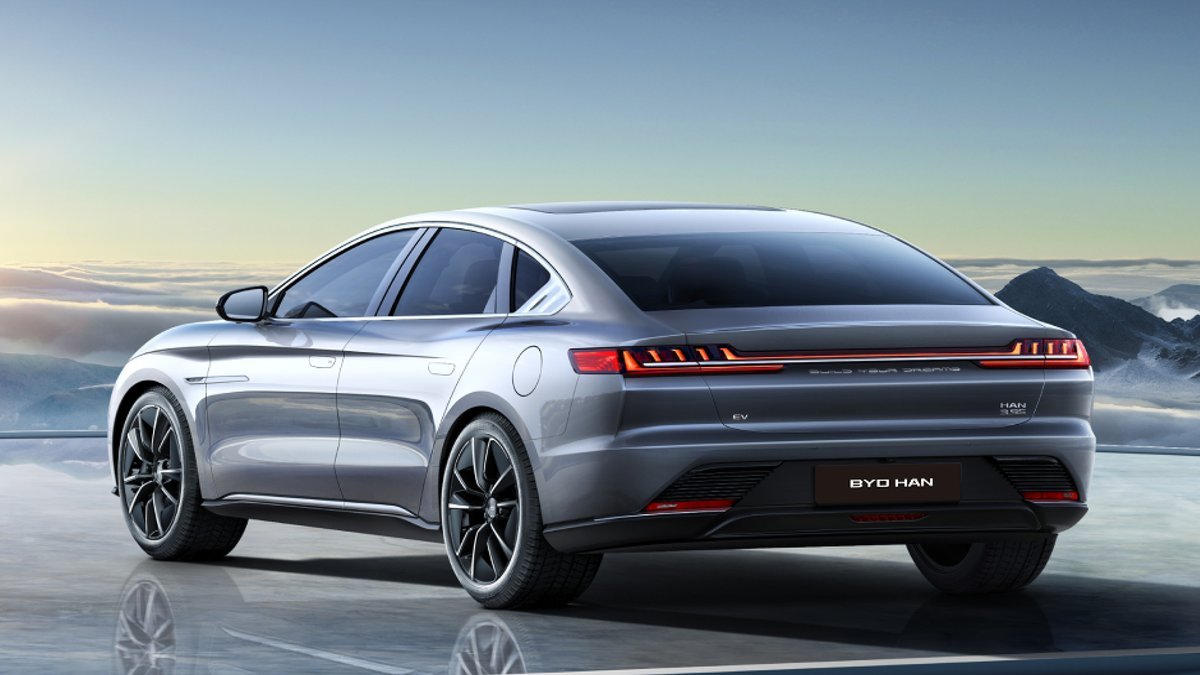
The BYD Han EV commands attention with its bold, aerodynamic silhouette. The front fascia features a sleek, closed-off grille flanked by sharp LED headlights, giving it a futuristic yet elegant appearance. The flowing lines and integrated rear spoiler not only enhance aesthetics but also contribute to a coefficient of drag of just 0.233 Cd, which aids efficiency and stability at high speeds.
Step inside, and the luxury experience continues. The cabin is wrapped in premium materials, including Nappa leather upholstery, authentic wood trim, and brushed aluminum accents. The 12.3-inch digital instrument cluster and a massive 15.6-inch rotating infotainment screen dominate the dashboard, creating a tech-forward ambiance. Heated and ventilated front seats with massage functions, a panoramic sunroof, and ambient lighting all come standard on higher trims. BYD has clearly invested in acoustics, with triple-layer soundproof glass and active noise cancellation making the cabin one of the quietest in its class.
According to BYD, the Han EV's interior sound level at 60 mph is just 62 decibels -- comparable to a much more expensive luxury sedan.
The attention to detail extends to rear passenger comfort, with ample legroom and a reclining rear seat option. The Han EV is more than a driver's car; it is designed to coddle all occupants.
2. advanced Blade Battery Technology and Range
Perhaps the most defining feature of the BYD Han EV is its proprietary Blade Battery. This lithium iron phosphate (LFP) battery pack is engineered for safety, longevity, and energy density. Unlike traditional NMC batteries, the Blade Battery cells are arranged in a honeycomb structure that provides exceptional thermal stability and structural rigidity. BYD claims the battery can withstand nail penetration tests without catching fire, a claim backed by independent tests.
The Han EV offers two battery pack options: an 85.4 kWh version and a larger 100.5 kWh pack. The larger pack provides an estimated range of up to 435 miles on the NEDC cycle, or roughly 360 miles under real-world conditions. That places it firmly in the conversation with the Lucid Air and Tesla Model S, but at a significantly lower price point. The battery also supports fast charging up to 180 kW, allowing a 10-80% charge in under 30 minutes.
BYD's battery management system optimizes charging speed and efficiency, while the LFP chemistry ensures minimal degradation over time. The company offers an 8-year/120,000-mile warranty on the battery, underscoring its confidence in the technology.
3. Performance and Driving Dynamics That Rival European Flagships
The BYD Han EV is available in both single-motor rear-wheel drive and dual-motor all-wheel drive configurations. The top-of-the-line Han EV Champion Edition 4WD produces a combined 517 hp and 700 Nm of torque, enabling a 0-60 mph time of just 3.9 seconds. That is supercar territory, yet the Han EV remains composed and refined in everyday driving.
Underneath, the Han EV uses a double-wishbone front suspension and a multi-link rear setup, tuned for comfort without sacrificing handling. Adaptive dampers are available, allowing the driver to switch between comfort and sport modes. The steering is light but precise, and the regenerative braking system offers multiple levels of adjustability. During a test drive on winding roads, the Han EV felt planted and confidence-inspiring, with minimal body roll despite its size.
One area where the Han EV truly shines is highway cruising. The combination of excellent aerodynamics, a quiet cabin, and a smooth ride make long journeys effortless. The intelligent torque vectoring system on AWD models further enhances traction and stability in adverse weather conditions.
4. Advanced Infotainment and Intelligent Features
The centerpiece of the Han EV's interior is the 15.6-inch rotating touchscreen, which runs BYD's DiLink 4.0 system. The screen can rotate between landscape and portrait orientation, similar to the Tesla Model S but with faster response times. The interface supports over-the-air updates, and it integrates seamlessly with popular apps like YouTube, Netflix, and navigation services.
Beyond infotainment, the Han EV is equipped with a comprehensive suite of driver-assistance features under BYD's DiPilot brand. This includes adaptive cruise control with stop-and-go, lane-keeping assist, automatic emergency braking, blind-spot monitoring, and a 360-degree camera system. The highway assist function works well, keeping the car centered in its lane and maintaining a safe distance from traffic.
Another standout feature is the voice assistant, which understands natural language commands for climate control, navigation, and media. It can also control the sunshade, windows, and seat adjustments. While not quite as advanced as some Chinese-market systems, the English voice controls are accurate and responsive.
Finally, the Han EV offers a Phone-as-Key feature using NFC and Bluetooth, allowing owners to lock/unlock and start the car with their smartphone. The companion app provides remote climate control, battery status, and charging location integration.
5. Value Proposition and Market Positioning
The BYD Han EV's biggest advantage is its value. In markets like China and Europe, it undercuts the Tesla Model S by tens of thousands of dollars while offering comparable range, performance, and luxury features. In the US, where BYD has not yet launched passenger vehicles, the Han EV serves as a benchmark for Chinese EV quality. Analysts suggest that if BYD were to bring the Han EV to America at a price point of around $50,000 before incentives, it would disrupt the midsize luxury sedan segment.
BYD is also aggressive in localizing its vehicles for global markets. The Han EV has been adapted for left-hand drive and meets European safety standards, achieving a 5-star Euro NCAP rating. This sends a clear message: BYD is serious about competing on the world stage.
The Han EV is more than a competent electric car; it is a harbinger of China's automotive ambitions. It proves that Chinese automakers can design, engineer, and produce a luxury vehicle that rivals the best from Germany, Japan, and the United States. For consumers seeking an affordable yet premium EV experience, the BYD Han EV deserves a spot on the shortlist.
overall, the BYD Han EV redefines premium by offering a compelling blend of design, technology, performance, and value. It is a flagship that not only represents BYD's best but also challenges the old guard to step up their game.
Key Takeaways
Understanding these concepts helps you make better decisions about your vehicle and communicate more effectively with mechanics.
How This Applies to Your Daily Driving
The concepts discussed here help you recognize early warning signs, communicate with service technicians, and make better maintenance decisions. This awareness can save significant money by catching issues early when repairs are simpler and less expensive.
Further Exploration
If you found this topic interesting and want to learn more, consider exploring related subjects that build on the concepts covered here. Many automotive topics are interconnected, and understanding one area often illuminates others. Your vehicle owner manual is an excellent resource for model-specific information that complements general guides like this one. Online communities dedicated to your specific vehicle make and model can provide real-world experiences and advice from owners who have encountered and solved the same challenges you may face.
Questions to Ask Before Making a Decision
Before finalizing your approach to the topic covered in this guide, consider a few key questions that will help you apply this information effectively. What is your primary goal, saving money, improving safety, increasing performance, or extending vehicle life? Understanding your priority helps you focus on the advice that matters most for your situation. What is your budget for any associated parts, tools, or professional services? Some recommendations may require an initial investment that pays for itself over time through reduced maintenance costs or improved fuel efficiency. What is your skill level and available time? Be honest about whether you can realistically perform the recommended tasks yourself or whether professional service is a better use of your time and provides better results. Answering these questions before taking action ensures you get the maximum benefit from the information presented here and avoid common mistakes that come from rushing into decisions without proper planning.
Additionally, consider consulting with a trusted mechanic or automotive professional who can provide personalized advice based on your specific vehicle make, model, and condition. While general guides like this one provide a solid foundation of knowledge, every vehicle has unique characteristics and potential issues that a professional who works on your specific model regularly can identify. Building a relationship with a reputable mechanic who communicates clearly and charges fair prices is one of the most valuable investments any car owner can make. If you do not already have a trusted mechanic, ask friends, family, or local community groups for recommendations, and visit a shop to observe their professionalism and cleanliness before committing to their services.