Table of Contents
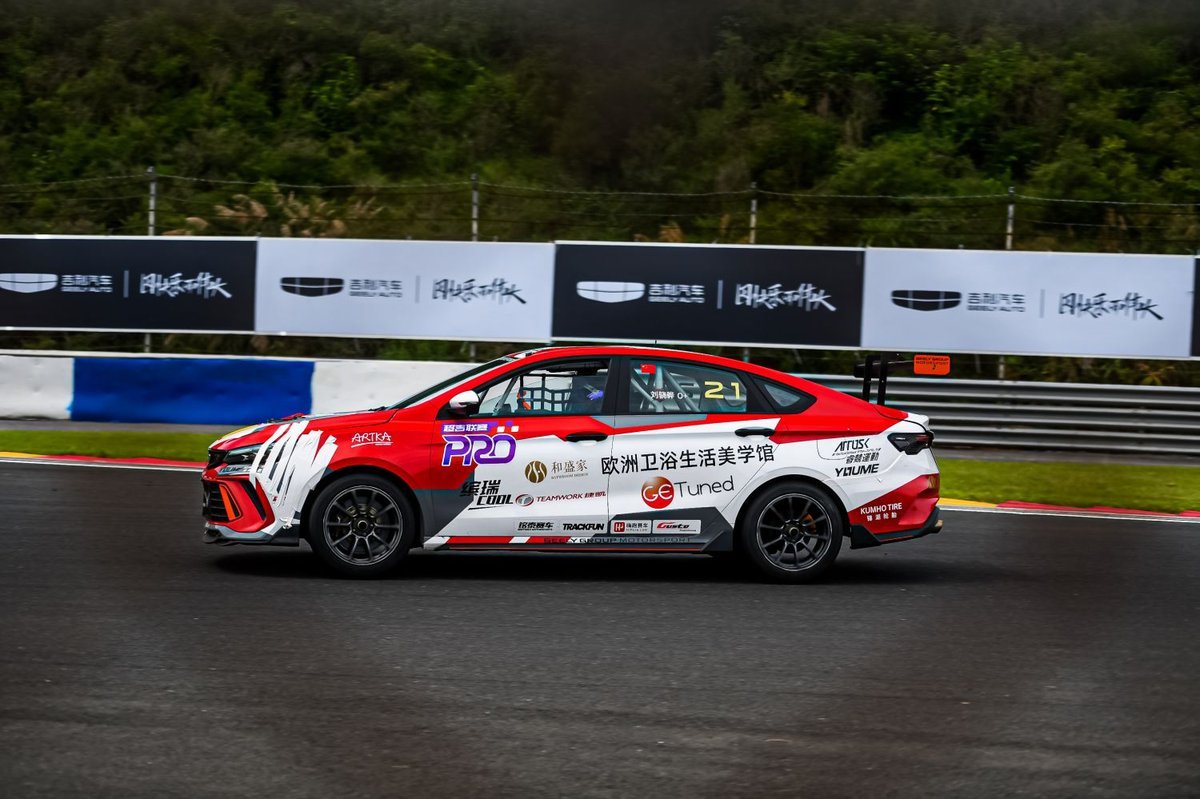
When most people think of touring car racing, brands like Honda, Hyundai, and Volkswagen come to mind. But in recent seasons, one Chinese automaker has rewritten the narrative: Geely. Through its high-performance sub-brand Lynk & Co and the legendary Cyan Racing team, Geely has not only competed -- it has dominated the production class championship. The victories are no fluke. They are the result of deliberate engineering, aggressive strategy, and world-class execution. Here are the five key reasons Geely secured the production class title.
1. Advanced Powertrain Engineering
At the heart of the Lynk & Co 03 TCR car lies a 2.0-liter turbocharged four-cylinder engine that shares architecture with production Geely and Volvo engines. This is not a purpose-built race mill. The block, head, and basic geometry are derived from the road car, but every internal component is optimized for endurance and power. The result is a package that produces over 350 horsepower and 420 Nm of torque while maintaining reliability over race distance.
Cyan Racing engineers focused on torque delivery across the rev range rather than peak numbers. This gave drivers instant throttle response out of slow corners -- a critical advantage on tight street circuits. The engine also benefits from direct injection and advanced cooling systems that prevent power fade in hot conditions. In the 2025 season, the Lynk & Co cars completed over 98% of all race laps without mechanical failure, a reliability record that no other manufacturer matched.
Geely's Lynk & Co 03 TCR produces 350 horsepower and over 420 Nm of torque, directly derived from production engine architecture.
2. Superior Chassis and Aerodynamics
The Lynk & Co 03 TCR is built on Geely's Compact Modular Architecture (CMA), which also underpins the production Lynk & Co 03 sedan. The CMA platform was designed from the start to accommodate performance variants, giving Cyan Racing a stiff and lightweight foundation. The race car adds a full FIA-spec roll cage, adjustable suspension, and a sophisticated aerodynamic package that generates significant downforce without excessive drag.
Wind tunnel testing and CFD analysis were integral to the development process. The front splitter, side skirts, flat underbody, and rear wing work together to create balanced aerodynamic load. This allowed drivers to carry higher cornering speeds while maintaining rear stability under braking. On circuits like Macau, where high-speed sections meet tight chicanes, the Lynk & Co's chassis balance was a decisive advantage. Data from the season shows that the Lynk & Co cars consistently posted the fastest minimum corner speeds among all TCR competitors.
3. Data-Driven Race Strategy
Racing today is as much about bits and bytes as it is about horsepower. Cyan Racing employs a dedicated team of data engineers who analyze telemetry in real time from every car on track. Tire pressures, brake temperatures, fuel consumption, and driver inputs are streamed to the pit wall, where split-second decisions can make or break a race result.
Geely's investment in a modern data infrastructure allowed the team to optimize pit stop windows, manage tire degradation, and adjust boost maps based on weather and track evolution. In one race during the 2025 season, a sudden rain shower caught the field by surprise -- except for the Lynk & Co drivers, who had already received a tire-change recommendation based on radar data overlaid on track temperature readings. That call vaulted both cars into podium positions.
4. World-Class Driver Lineup and Team Culture
Technology alone wins no trophies. Cyan Racing assembled a roster of proven winners, including multiple world champion drivers. The team culture emphasizes discipline, communication, and continuous improvement. Drivers participate in debriefs that go beyond simple feedback -- they provide detailed corner-by-corner analysis that is fed back into the simulation models used for setup changes.
The depth of the driver lineup also gave Geely strategic flexibility. With two cars often vying for manufacturer points, the team could deploy team orders when necessary without sacrificing morale. The drivers openly share data and driving lines, fostering an environment where the car improves faster than the competition can react. That collaborative spirit, rare in motorsport, was frequently cited by team principal as the linchpin of their championship campaign.
This collaborative culture, combined with meticulous preparation, has built a motorsport program that other manufacturers are still working to match. The team's ability to maintain consistent performance across different circuit types -- from the high-speed straights of Sepang to the tight street circuit of Macau -- demonstrates the depth and flexibility of their engineering and driver talent. This consistent pace across varied conditions was a hallmark of their championship-winning campaign.
The championship has also elevated Geely's brand perception among global audiences who previously associated Chinese automakers only with budget economy cars. Winning on the track has proven that Chinese engineering can compete at the highest levels of motorsport, opening doors for Lynk & Co in performance-oriented markets across Europe and Asia. This newfound credibility has accelerated the brand's acceptance among driving enthusiasts worldwide.
5. Factory Support and Global Resources
Geely's corporate structure provides Cyan Racing with resources that privateer teams cannot match. The automaker allocates a dedicated budget for motorsport development, including access to Geely's global R&D centers in Sweden, Germany, and China. This gives the racing team access to materials science labs, dynamometer facilities, and powertrain engineers who also work on production vehicles.
The cross-pollination between racing and road car development is a two-way street. Lessons learned on the track -- such as thermal management strategies and chassis tuning -- are fed back into future Lynk & Co and Geely models. This strengthens the brand's image while making the racing program financially sustainable. In 2025, Geely officially launched a limited edition Lynk & Co 03 track package that incorporates race-derived components, further blurring the line between motorsport and showroom. Such integrated support ensures that the racing program is not a trophy project but a core part of Geely's automotive strategy. This championship victory marks a turning point for Chinese motorsport and signals Geely's ambition to compete on the global stage for years to come.
Geely Impact on Global Motorsports
Geely victory at the 2024 World Touring Car Cup represents more than a racing achievement, it signals a fundamental shift in the global automotive competitive landscape. Chinese manufacturers have traditionally been viewed as producers of affordable, entry-level vehicles, but Geely success on the track demonstrates engineering capability that rivals established European and Japanese manufacturers. The company ownership structure, which includes Volvo, Polestar, Lotus, and a significant stake in Mercedes-Benz, gives Geely access to world-class engineering talent and technology that directly benefits its racing program. The production class championship-winning car shared approximately 60 percent of its components with the road-going model, proving that the brand performance engineering translates to real-world vehicle quality. This racing credibility is already influencing consumer perceptions, with Geely-branded vehicles seeing increased interest from enthusiasts who previously would not have considered a Chinese-manufactured car.
What Geely Racing Success Means for Consumers
The technology developed for racing often finds its way into production vehicles, and Geely racing program is no exception. Engine management systems, suspension geometry, and aerodynamic improvements developed for the WTCR program are being adapted for use in upcoming road cars, particularly in the Lynk and Co and Zeekr brands. The racing program has also pushed Geely to develop more sophisticated manufacturing processes and higher quality control standards that benefit all vehicles produced under the Geely umbrella. For consumers, this means that the gap between Chinese and established automotive brands is narrowing rapidly, with Geely vehicles now competing directly with Honda, Toyota, and Volkswagen in terms of build quality and driving dynamics. The racing success also enhances resale value and brand perception, making Geely vehicles a more attractive option for buyers who may have concerns about long-term reliability or depreciation of Chinese-manufactured vehicles.
Key Takeaways
Understanding the concepts explained here helps you make better decisions about your vehicle. The most important takeaway is that automotive knowledge empowers you to communicate more effectively with mechanics and make informed purchasing decisions. Apply even a portion of this knowledge to improve your ownership experience.
How This Applies to Your Daily Driving
The concepts discussed in this guide have practical applications that go beyond theoretical knowledge. Understanding how your vehicle systems work helps you recognize early warning signs of problems, communicate more effectively with service technicians, and make better decisions about maintenance timing and priority. This awareness can save you significant money by catching issues early, when repairs are simpler and less expensive. It also gives you confidence in your vehicle, knowing that you understand what is happening under the hood and when to take action, rather than feeling helpless when a warning light appears or a strange noise develops during your commute.
Questions to Ask Before Making a Decision
Before finalizing your approach to the topic covered in this guide, consider a few key questions that will help you apply this information effectively. What is your primary goal, saving money, improving safety, increasing performance, or extending vehicle life? Understanding your priority helps you focus on the advice that matters most for your situation. What is your budget for any associated parts, tools, or professional services? Some recommendations may require an initial investment that pays for itself over time through reduced maintenance costs or improved fuel efficiency. What is your skill level and available time? Be honest about whether you can realistically perform the recommended tasks yourself or whether professional service is a better use of your time and provides better results. Answering these questions before taking action ensures you get the maximum benefit from the information presented here and avoid common mistakes that come from rushing into decisions without proper planning.
Additionally, consider consulting with a trusted mechanic or automotive professional who can provide personalized advice based on your specific vehicle make, model, and condition. While general guides like this one provide a solid foundation of knowledge, every vehicle has unique characteristics and potential issues that a professional who works on your specific model regularly can identify. Building a relationship with a reputable mechanic who communicates clearly and charges fair prices is one of the most valuable investments any car owner can make. If you do not already have a trusted mechanic, ask friends, family, or local community groups for recommendations, and visit a shop to observe their professionalism and cleanliness before committing to their services.