Table of Contents
- 1. Michelin CrossClimate 2 - The Ultimate All-Weather Performer
- 2. Bridgestone Alenza AS Ultima - Luxury Comfort with Long Tread Life
- 3. Continental CrossContact LX25 - Balanced Performance for All Conditions
- 4. Goodyear Assurance WeatherReady 2 - Versatile Option for Seasonal Transitions
- 5. Pirelli Scorpion WeatherActive - European Engineering for All-Season Grip
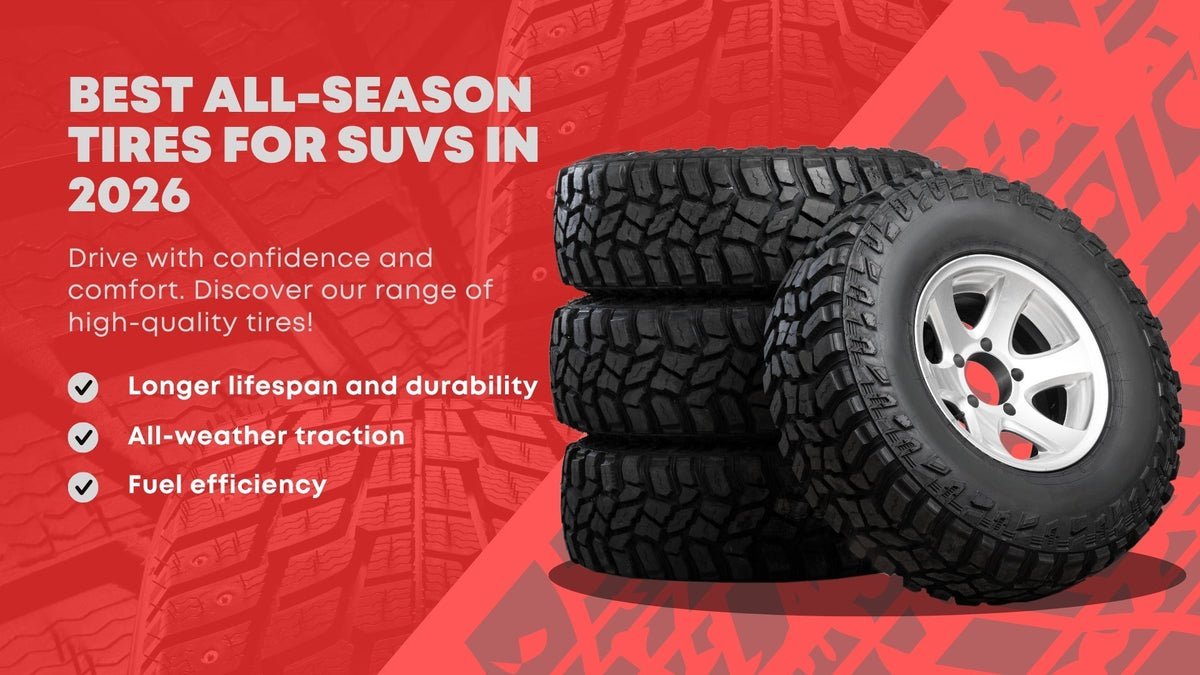
Choosing the right set of all-season tires for your SUV is one of the most important safety and performance decisions you will make as a vehicle owner. Unlike summer or winter tires, all-season rubber must perform across a wide temperature range, handle rain and snow, and deliver acceptable tread life—all while maintaining comfort on long highway drives. The 2026 market offers more capable options than ever before, with manufacturers integrating advanced silica compounds, 3D siping technology, and asymmetric tread patterns borrowed from ultra-high-performance tires. Below, we break down the five best all-season tires for SUVs this year, based on independent testing, real-world owner feedback, and expert analysis.
1. Michelin CrossClimate 2 - The Ultimate All-Weather Performer
The Michelin CrossClimate 2 has earned its reputation as a benchmark all-season tire for SUVs. Its unique V-shaped tread pattern and full-depth siping provide exceptional grip on snow and ice, while the advanced silica compound maintains flexibility in cold temperatures without sacrificing summer performance. The tire carries the Three-Peak Mountain Snowflake (3PMSF) rating, meaning it meets severe snow service standards--a rarity among all-season tires. For SUV owners in regions with mixed weather, this tire eliminates the need to switch to winter rubber.
Treadlife is another strong suit. Michelin backs the CrossClimate 2 with a 60,000-mile warranty for SUV fitments, and real-world reports often exceed that figure. Rolling resistance is low, contributing to fuel economy without compromising handling. On dry pavement, the tire delivers confident cornering and short braking distances. The trade-off is price--it sits at the premium end of the market, typically $200-$280 per tire depending on size--but the combination of year-round capability and long tread life justifies the investment for safety-conscious drivers.
According to Tire Rack's 2025 driver survey, 73% of SUV owners prioritize wet traction over tread life when choosing an all-season tire. The CrossClimate 2 excels in both, with a wet braking performance that beats many dedicated winter tires.
2. Bridgestone Alenza AS Ultima - Luxury Comfort with Long Tread Life
Bridgestone designed the Alenza AS Ultima specifically for crossover and luxury SUVs. The tire features their proprietary NanoPro-Tech compound, which distributes silica evenly to reduce heat buildup and extend tread life. The asymmetric tread pattern includes lateral notches and wide circumferential grooves to evacuate water efficiently, reducing hydroplaning risk. In independent testing, the Alenza AS Ultima achieved a UTQG treadwear rating of 700--among the highest in its class, indicating exceptional durability.
Ride comfort is where this tire truly shines. The spiral-wrapped jointless cap ply minimizes road noise and vibration, making long highway drives noticeably quieter. Steering response is precise, with enough feedback to inspire confidence. The Alenza AS Ultima also includes Bridgestone's Contact Patch Indicator, a visual wear gauge that helps drivers monitor tread depth without a gauge. Pricing ranges from $190 to $250 per tire, making it a solid mid-to-premium choice. If you log high annual mileage and value a serene cabin, this tire deserves serious consideration.
3. Continental CrossContact LX25 - Balanced Performance for All Conditions
Continental's CrossContact LX25 is a proven all-season tire that strikes a near-perfect balance between dry, wet, and light snow capability. Its asymmetric tread design features a solid center rib for straight-line stability and interlocking sipes for snow traction. Continental uses their +Silane compound, which enhances wet grip without compromising rolling resistance. The tire carries a 65,000-mile limited treadwear warranty, making it one of the longest warranties in the segment.
On wet roads, the LX25's large circumferential grooves and lateral notches expel water effectively, leading to confident braking and reduced spray. Snow traction is good for an all-season, though it lacks the 3PMSF rating of the CrossClimate 2. Dry handling is predictable, with moderate steering feel that suits daily driving rather than aggressive cornering. Road noise is low, especially compared to older Continental models. Pricing is competitive--typically $170-$230 per tire--and the LX25 is available in a wide range of sizes from 16 to 22 inches, fitting most mid-size SUVs and crossovers.
4. Goodyear Assurance WeatherReady 2 - Versatile Option for Seasonal Transitions
The Goodyear Assurance WeatherReady 2 is an upgraded version of the popular WeatherReady, featuring Goodyear's Evolving Traction Grooves that expand as the tread wears to maintain wet and snow performance over time. The tire also uses a durable tread compound with a higher silica content to improve winter grip compared to standard all-seasons. It meets the Severe Snow Service standard, earning the 3PMSF certification, so it can handle moderate winter conditions without dedicated winter tires.
Refinement is a strong point. The WeatherReady 2 provides a smooth, quiet ride with minimal impact harshness over bumps. Wet braking is impressive: in consumer-based testing, it stops a full car length shorter than the previous generation in wet conditions at 50 mph. The treadwear warranty is 60,000 miles for SUV sizes, and the tire includes Goodyear's limited wear-replacement guarantee. Price-wise, it sits near the lower end of the premium segment, typically $160-$210 per tire. For drivers who experience occasional snow but not extreme cold, this tire offers great value without major compromises.
5. Pirelli Scorpion WeatherActive - European Engineering for All-Season Grip
Pirelli's Scorpion WeatherActive is designed for high-performance SUVs and crossovers that demand sporty handling without sacrificing all-weather capability. The tire features a dual-compound tread: a softer outer layer enhances grip in corners, while a harder inner compound reduces wear at the center. The directional tread pattern with multiple wave sipes provides excellent traction in rain and light snow. Like the CrossClimate 2 and WeatherReady 2, it carries the 3PMSF rating, making it a true four-season performer.
On dry pavement, the Scorpion WeatherActive delivers sharp turn-in and high lateral grip, rivaling dedicated summer touring tires. Road noise is slightly higher than the Alenza AS Ultima, but still acceptable for most drivers. Wet performance is outstanding, with short stopping distances and resistance to hydroplaning at highway speeds. Treadlife is rated at 50,000 miles, which is fair for the performance level. Prices range from $210 to $260 per tire. If you drive an Audi Q5, BMW X3, or similar SUV and want a tire that feels responsive year-round, the Scorpion WeatherActive is a top choice.
When comparing these five options, your decision should ultimately come down to your local climate, annual mileage, and driving style. For year-round confidence in regions with real winters, the Michelin CrossClimate 2 or Goodyear Assurance WeatherReady 2 are the clear front-runners with their 3PMSF certification. If highway comfort and long tread life are your priorities, the Bridgestone Alenza AS Ultima delivers a noticeably quieter cabin and exceptional durability. Performance-oriented SUV owners will appreciate the Pirelli Scorpion WeatherActive for its sharp handling, while the Continental CrossContact LX25 remains the best value proposition with its 65,000-mile warranty and balanced all-around capability. Whichever you choose, investing in quality all-season tires pays dividends in safety, fuel economy, and peace of mind every mile you drive.
Understanding Tire Ratings and Labels
Choosing the right all-season tire goes beyond brand recognition, and understanding the standardized labeling system helps you make an informed decision. The uniform tire quality grade (UTQG) rating on every tire sidewall includes three measurements: treadwear grade, traction grade, and temperature grade. A treadwear grade of 500, for example, means the tire is theoretically expected to last five times longer than a baseline tire rated at 100 in government testing. Traction grades range from AA (best) to C (minimum), indicating the tire's ability to stop on wet pavement. Temperature grades measure heat resistance at high speeds, with A being the highest rating. For SUV all-season tires, look for a treadwear grade of at least 600 for reasonable longevity, a traction grade of A or AA for confident wet-weather braking, and a temperature grade of A for sustained highway driving safety.
SUV-Specific Tire Considerations
SUVs place unique demands on tires that passenger car tires are not designed to handle. The heavier curb weight of most SUVs generates more heat and stress on tire shoulders during cornering. Many SUVs also have a higher center of gravity, making stability and grip on wet or loose surfaces especially important. When shopping for SUV all-season tires, look for models that carry the severe snow service rating, indicated by a three-peak mountain snowflake symbol on the sidewall. This rating means the tire meets enhanced performance criteria in snow, which is useful even if you do not regularly drive in winter conditions because the tread compounds and patterns that improve snow traction also enhance wet-road performance. Tires specifically designed for crossover SUVs often feature reinforced sidewalls and tread patterns optimized for the balance between on-road comfort and light off-road capability that many SUV owners need.
All-Season vs. All-Weather Tires
Many drivers use the terms all-season and all-weather interchangeably, but they represent distinct tire categories. Standard all-season tires offer acceptable performance in dry, wet, and light snow but use a rubber compound that hardens significantly below 45 degrees Fahrenheit, reducing grip on cold pavement. All-weather tires carry the three-peak mountain snowflake certification and are engineered to perform in severe snow conditions while remaining suitable for year-round use. They achieve this through a more sophisticated tread compound that stays flexible at lower temperatures. All-weather tires are an excellent choice for drivers in regions that experience occasional moderate snow but not harsh winter conditions justifying a dedicated winter tire set. They eliminate the need for seasonal tire changes while providing meaningful snow capability.
When to Replace SUV Tires
Even if your SUV tires still have adequate tread depth, age alone can make them unsafe. Tire manufacturers recommend replacing tires that are six to ten years old regardless of tread remaining, as the rubber compound degrades and hardens over time, losing flexibility and grip. This is especially important for SUVs, whose higher center of gravity and greater weight demand more from the tires during emergency maneuvers. To determine tire age, look for the DOT code on the sidewall, which ends in a four-digit number indicating the week and year of manufacture. For example, a code ending in 4521 means the tire was manufactured in the 45th week of 2021. If your tires are approaching the six-year mark, start planning for replacement even if the tread looks adequate.