Table of Contents
1. Keep Your Tires Properly Inflated
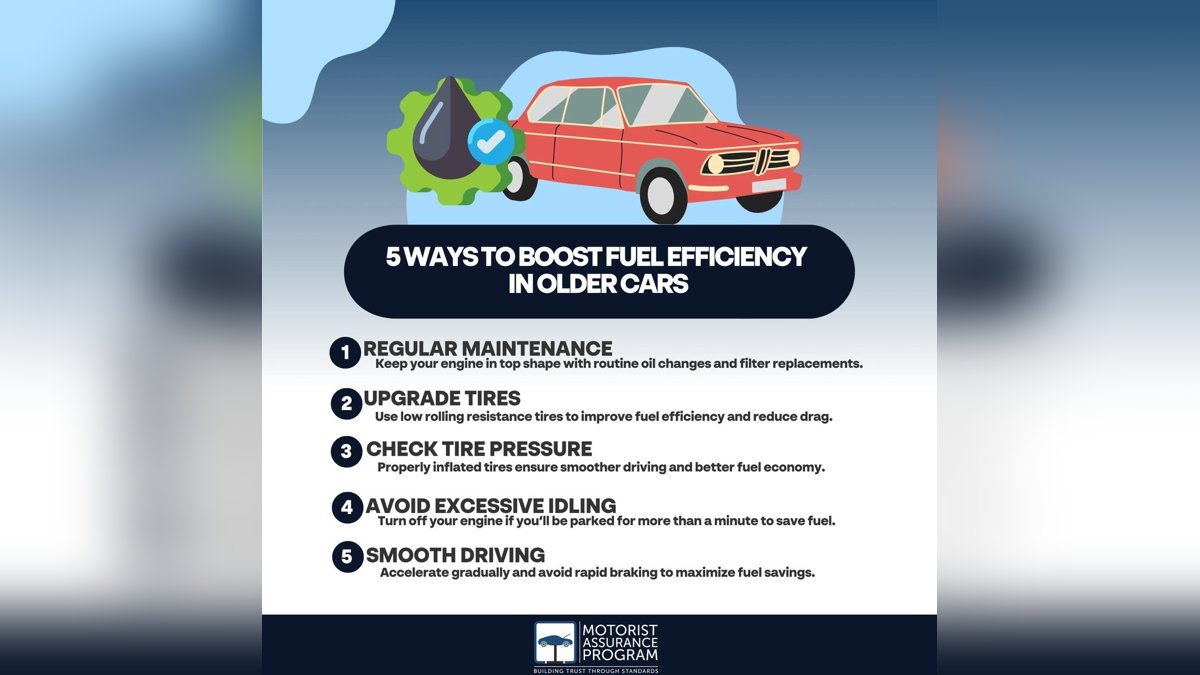
One of the easiest and most effective ways to improve your car's fuel economy is to maintain the correct tire pressure. Under-inflated tires create more rolling resistance, forcing your engine to work harder and consume more fuel. According to the U.S. Department of Energy, properly inflated tires can improve gas mileage by up to 3% on average. That might not sound like much, but over a year of driving, it can add up to significant savings.
Check your tire pressure at least once a month and before long trips. Use a reliable gauge and inflate to the pressure recommended in your owner's manual or on the sticker inside the driver's door jamb. Don't rely on the maximum pressure printed on the tire sidewall -- that's for the tire's load capacity, not your car's optimal fuel efficiency.
"A drop of just 5 psi in tire pressure can reduce fuel economy by 2% and cause tires to wear out faster. Check your pressure monthly." -- AutoPulse Research
Remember to check pressure when tires are cold (car parked for at least three hours) for the most accurate reading. Proper inflation not only saves fuel but also improves handling and extends tire life.
Wheel alignment also plays a direct role in fuel economy. Misaligned wheels create rolling resistance as the tires fight against each other. If you notice your car pulling to one side or uneven tire wear across the tread, an alignment correction can improve MPG by up to 10% in severe cases. Alignment should be checked annually or whenever you replace tires.
2. Drive Smoothly and Avoid Aggressive Behavior
Your driving style has a massive impact on fuel consumption. Rapid acceleration, hard braking, and speeding can lower your gas mileage by 15% to 30% at highway speeds and 10% to 40% in stop-and-go traffic. The key is to drive smoothly -- anticipate traffic flow, maintain a steady speed, and accelerate gently.
Use cruise control on highways to maintain a constant speed, which can improve fuel economy by up to 14% on long trips. However, avoid using cruise control on hilly terrain where it may cause unnecessary gear shifts. Also, try to avoid idling for more than 30 seconds; restarting your engine uses less fuel than idling for that long.
By adopting fuel-efficient driving habits, you can see immediate improvements at the pump without any modifications to your car. It's a win-win for your wallet and the environment.
3. Reduce Excess Weight and Drag
Every extra pound in your car requires more energy to move, which reduces fuel economy. The Department of Energy estimates that an additional 100 pounds can reduce fuel efficiency by about 1% in a typical midsize car. That might not seem like much, but over a year, carrying around unnecessary gear can cost you more than you think.
Clear out your trunk and back seat of items you don't need daily. Roof racks, cargo boxes, and bike carriers also create aerodynamic drag, cutting fuel economy by 5% to 25% at highway speeds. If you're not using them, remove them. For every 100 pounds removed, you can expect a 1-2% improvement in MPG. Combined with smoother driving, you could see a 5-10% overall boost in fuel economy.
Air conditioning usage also matters more than many drivers realize. Running the AC at highway speeds is actually more efficient than opening the windows, which creates aerodynamic drag that hurts fuel economy. But in stop-and-go city driving, turning off the AC and using the ventilation fan saves more fuel than the drag penalty of open windows at low speeds. Use this knowledge based on your current driving environment.
4. Keep Your Engine Properly Tuned
Regular engine maintenance is crucial for optimal fuel efficiency. A well-tuned engine can improve gas mileage by an average of 4%, while fixing a serious issue like a faulty oxygen sensor can boost mileage by as much as 40%. Simple maintenance tasks like replacing spark plugs, air filters, and fuel filters according to your manufacturer's schedule keep your engine running efficiently.
Dirty air filters restrict airflow, causing the engine to run rich (too much fuel). Replacing a clogged air filter can improve acceleration and fuel economy, especially in older cars with carbureted engines. Modern fuel-injected vehicles also see real benefits from clean filters, making this simple maintenance step worthwhile for any driver. Modern fuel-injected cars are less sensitive, but it's still good practice. Also, use the recommended grade of motor oil -- the label "energy-conserving" oil can reduce friction by up to 2%.
Don't ignore your check engine light. Even a minor issue can significantly reduce fuel economy. An annual tune-up or inspection can pay for itself in fuel savings over time.
5. Plan Your Trips and Combine Errands
How and when you drive matters as much as how you maintain your car. Cold starts consume more fuel because the engine hasn't reached its optimal operating temperature. Combine multiple errands into one trip rather than making several short trips from a cold start. A single longer trip will be more fuel-efficient than multiple short ones because the engine stays warm.
Use navigation apps to avoid traffic congestion and find the most efficient route. Idling in heavy traffic wastes fuel -- the average driver wastes about 6 minutes per day idling, which can cost up to $20 per year in wasted fuel. Also, consider parking in the shade to reduce cabin temperature and the load on your air conditioner, which can lower fuel economy by up to 25% in extreme conditions.
By planning ahead, you can reduce the number of trips, avoid traffic jams, and keep your engine operating efficiently. It's a simple habit that saves time, fuel, and reduces wear on your car. Reducing your highway speed by just 5 mph can also improve fuel economy by up to 7% on long trips. Combining these fuel-saving habits with regular maintenance ensures you get the most value from every tank of gas, saving hundreds of dollars annually.
Fuel Economy Myths vs. Facts
Several long-standing beliefs about fuel economy do not hold up under scrutiny. The idea that premium fuel improves gas mileage in any vehicle is false, using premium fuel in an engine designed for regular gasoline provides no benefit and simply wastes money. Similarly, the belief that manual transmissions are always more fuel-efficient than automatics is outdated. Modern automatic transmissions with eight, nine, or ten speeds often achieve better fuel economy than their manual counterparts, especially in highway driving. Turning off your air conditioning to save fuel is effective only at low speeds or in stop-and-go traffic. At highway speeds, the aerodynamic drag from open windows actually creates more resistance than running the AC compressor. The single most effective habit for improving fuel economy is maintaining a steady speed, as frequent acceleration and deceleration can reduce highway mileage by 15 to 30 percent.
Long-Term Habits That Improve Efficiency
Beyond driving techniques, certain maintenance habits directly impact your vehicle's fuel consumption. Keeping tires inflated to the recommended pressure can improve gas mileage by up to 3 percent, as under-inflated tires create more rolling resistance. Using the recommended grade of motor oil reduces internal engine friction, and sticking to the oil change schedule prevents the buildup of sludge that can hamper efficiency. Replacing a clogged air filter can improve acceleration and fuel economy, particularly on older vehicles with carbureted engines. Reducing unnecessary weight by removing roof racks, cargo boxes, or heavy items from the trunk when they are not needed can improve fuel economy by 1 to 2 percent for every 100 pounds removed. These small gains add up significantly over the course of a year, potentially saving several hundred dollars at the pump.
Advanced Driving Techniques for Efficiency
Beyond the basic tips, several advanced driving techniques can push your fuel economy even higher. Pulse-and-glide driving involves accelerating gently to a few miles per hour above your target speed, then coasting with the engine still running until you slow below your target, then repeating the cycle. This technique keeps the engine operating in its most efficient RPM range. Hybrid and electric vehicle owners can maximize regenerative braking efficiency by anticipating stops well in advance and applying light, steady brake pressure. Reading the road ahead is perhaps the most important skill for fuel-efficient driving. By looking 10 to 15 seconds ahead, you can identify upcoming hills, traffic lights, and slowdowns early enough to adjust your speed without using the brakes. Every time you brake, you are converting kinetic energy into heat, energy that you paid for in fuel.
How Vehicle Load Affects Fuel Consumption
The weight and aerodynamics of your vehicle dramatically influence fuel consumption. An extra 100 pounds of weight can reduce fuel economy by approximately 1 percent. Roof racks and cargo boxes are even more detrimental, as they disrupt the aerodynamic profile. An empty roof rack can reduce highway fuel economy by 5 to 10 percent simply by creating drag, and a loaded cargo box can reduce it by 10 to 25 percent. If you only need your roof rack occasionally, install it only when needed. Towing a trailer has the most significant impact on fuel economy, potentially cutting your mileage by 30 to 50 percent. When towing is necessary, maintaining a steady speed below 60 miles per hour helps minimize the fuel economy penalty.