Table of Contents
In 2026, the European automotive landscape is undergoing a seismic shift. Chinese electric vehicle (EV) manufacturers -- once dismissed as budget alternatives -- now account for over 15% of new EV sales across the continent, according to JATO Dynamics. From bustling streets of Berlin to the highways of Paris, brands like BYD, NIO, and XPeng are not just competing; they are redefining consumer expectations. But how did Chinese automakers achieve this rapid conquest? Below, we unpack the five critical strategies driving their European invasion.
1. Aggressive Pricing That Undercuts Legacy Automakers
Price remains the single most visible weapon in the Chinese EV arsenal. In 2026, the average price of a Chinese-brand EV sold in Europe is roughly 25% lower than comparable models from Volkswagen, Stellantis, or Renault. Take the BYD Dolphin -- a compact hatchback that starts at €22,000, undercutting the VW ID.3 by over €9,000. This price gap is not a short-term promotion; it is built into the economics of Chinese manufacturing.
Chinese EV makers benefit from vertically integrated supply chains, particularly for batteries. BYD, for instance, produces its own Blade Battery, eliminating the margin paid to suppliers like LG or CATL (though CATL is also Chinese). Additionally, labor costs in China remain lower, and factories operate at massive scale. These efficiencies allow brands to offer feature-rich vehicles -- including large touchscreens, advanced driver-assistance systems, and premium interior materials -- at prices European OEMs cannot match without sacrificing profit.
The effect on the market has been dramatic. In the first quarter of 2026, Chinese EV sales in Europe surged 62% year-over-year, while many European automakers reported flat or declining EV volumes. For price-sensitive buyers -- fleet operators, young professionals, and families -- the value proposition is simply irresistible.
"By 2027, we expect one in five EVs sold in Europe to be a Chinese brand, up from one in twelve in 2024," says Dr. Helena Schmidt, automotive analyst at Transport & Environment. "Legacy automakers can no longer rely on brand loyalty alone."
2. advanced Battery and Manufacturing Technology
Beyond pricing, Chinese EV makers are leveraging technological breakthroughs that many European competitors have yet to commercialize. The most significant is battery chemistry. In 2026, the majority of Chinese EVs sold in Europe are equipped with LFP (lithium iron phosphate) batteries, which offer longer cycle life, better thermal stability, and lower cost than traditional NMC (nickel manganese cobalt) batteries. BYD's Blade Battery, already proven in the best-selling Seagull and Atto 3, is now being used in its European-market models with warranties of up to 1 million kilometers.
Another differentiator is cell-to-pack (CTP) technology, which eliminates modules and packs more energy into the same space. Chinese manufacturers like CATL and BYD have pushed CTP to its third generation, delivering energy densities over 200 Wh/kg at the pack level -- comparable to premium NMC packs but at a fraction of the cost. European automakers are licensing these technologies, but they trail in production scale.
Perhaps most notably, Chinese factories are among the most automated in the world. Tesla's Shanghai Gigafactory set the benchmark, but BYD's new plant in Hungary -- operational since late 2025 -- uses similar robotics and AI-driven quality control. This allows production of up to 300,000 vehicles per year with defect rates below 0.5%, challenging German quality stereotypes.
3. Strategic Local Assembly and Partnerships
To circumvent European Union tariffs -- which in 2024 ranged from 10% to as high as 25% on Chinese-made EVs -- Chinese brands have rapidly established local assembly operations. BYD's factory in Szeged, Hungary, started producing the Atto 3 and Dolphin for European markets in early 2026, avoiding import duties and shortening delivery times. NIO is following suit with a plant in Bielefeld, Germany, expected to open by Q3 2026.
These local factories not only reduce costs but also improve supply chain resilience and geopolitical goodwill. Additionally, Chinese automakers are entering joint ventures with European companies. For example, XPeng partnered with Volkswagen to share vehicle architecture and software, while SAIC (owner of MG) continues to use former British brand heritage to reassure buyers. The result: Chinese EVs increasingly feel like local products, complete with European supply chains, labor, and branding.
By producing within the EU, these companies also comply with strict local content requirements, qualifying for government incentives and avoiding the risk of further tariff hikes. This move has been crucial for winning over fleet operators and corporate buyers who prioritize ESG compliance and domestic manufacturing.
4. Over-the-Air (OTA) Software and Premium Smart Features
Chinese EV makers have leapfrogged many legacy automakers in software integration. In 2026, even entry-level models like the MG4 offer OTA updates that improve battery range, add new infotainment apps, and enhance autonomous driving features over time -- something still rare in Volkswagen or Stellantis vehicles. NIO's Banyan system, running on a chipset more powerful than many laptops, powers a 3D navigation interface, voice control that understands natural language, and a digital key that works across multiple devices.
This software-first approach allows Chinese brands to regularly add features that delight users. For example, BYD recently released an OTA update that reduced the windshield glare by adjusting the HUD display brightness -- a simple fix that European rivals would have required a service visit to implement. Moreover, Chinese vehicles are built with more sensors and computing power from day one, enabling features like remote parking via smartphone and real-time traffic predictions.
European consumers have noticed. In a 2026 YouGov survey, 71% of EV owners under 40 rated the in-car technology of Chinese brands as "superior" to that of traditional European automakers. With each OTA update, the gap widens.
5. Agile Navigation of EU Regulatory and Trade Barriers
The regulatory environment in Europe has been a double-edged sword for Chinese EV makers. On one hand, the EU's ambitious 2035 combustion-engine ban creates a growing market. On the other hand, anti-subsidy investigations and tariff threats have loomed since 2023. In 2026, Chinese brands have responded with a multi-pronged strategy: they set up local factories (as noted), aggressively lobby EU policymakers through industry associations, and even build vehicles in joint ventures that qualify as 'European' under rules of origin.
For instance, the new BYD Dolphin produced in Hungary uses batteries from BYD's own factory in China, but because assembly takes place in the EU, only the battery value is subject to tariff -- a fraction of the total. Additionally, Chinese companies are investing heavily in European R&D centers, employing thousands of engineers in Germany, France, and Sweden. This not only provides local jobs but also demonstrates a long-term commitment that eases regulatory scrutiny.
Finally, Chinese automakers have begun integrating with Europe's charging infrastructure. NIO has installed dozens of battery swap stations across Germany and the Netherlands, while XPeng and BYD have partnerships with IONITY and Fastned. By solving the charging anxiety issue, they remove a key barrier to adoption. As a result, even the most skeptical regulators now see Chinese EVs as contributors to Europe's green transition rather than a threat.
In summary, the conquest of Europe by Chinese EV makers in 2026 is no accident. Through aggressive pricing, advanced battery tech, local production, smart software, and savvy regulatory navigation, they have established a presence that is here to stay. For European automakers, the message is clear: innovate, cut costs, and collaborate -- or risk being left behind.
Key Chinese EV Brands Leading the European Push
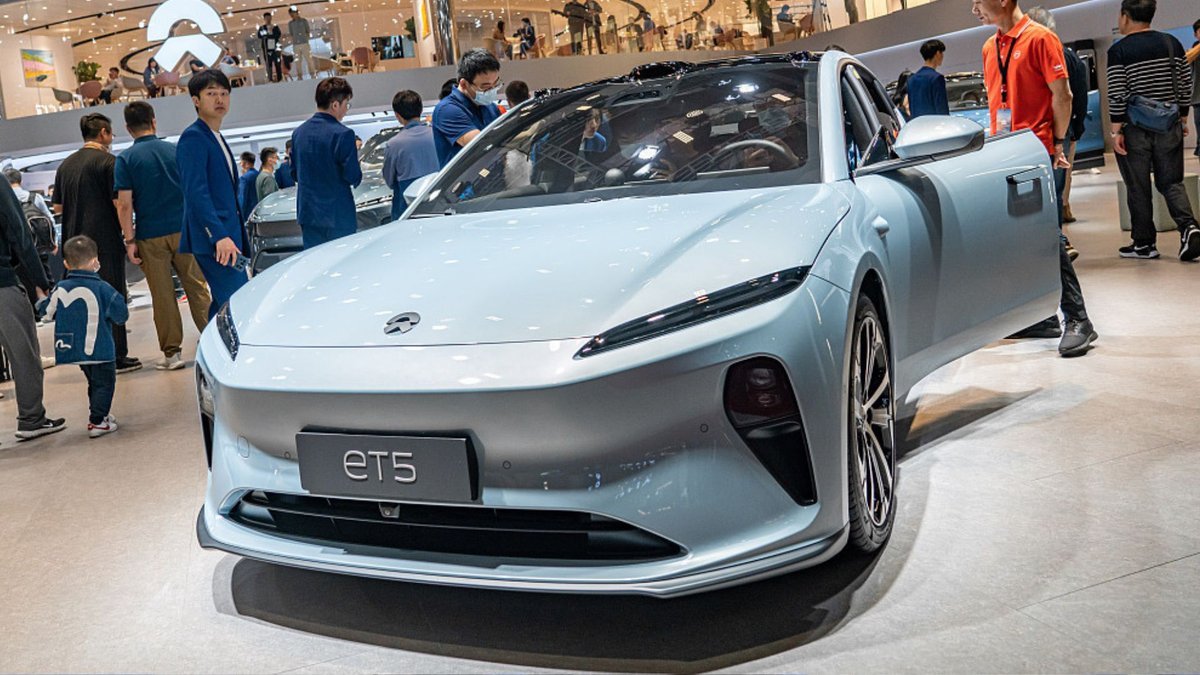
Several Chinese EV manufacturers are leading the charge into the European market, each with distinct strategies and brand positioning. BYD, already the world largest electric vehicle manufacturer by volume, has established a strong European presence with models like the Atto 3, Seal, and Dolphin, all of which received five-star Euro NCAP safety ratings that helped overcome consumer skepticism about Chinese-built vehicle safety. NIO targets the premium segment with its ET7 and ET5 sedans and EL7 SUV, leveraging its innovative battery swap technology and a direct-to-consumer sales model similar to Tesla. XPeng focuses on technology-forward buyers with its advanced driver assistance systems and sleek design language. MG, now owned by Chinese state-owned SAIC Motor, has successfully revived its historic British brand identity to position itself as a familiar face in the European market while benefiting from Chinese manufacturing efficiency. Great Wall Motors has entered through the premium Ora brand with the retro-styled Funky Cat, appealing to style-conscious urban buyers.
Challenges and Opportunities for Chinese EVs in Europe
Despite their rapid advancement, Chinese EV manufacturers face significant challenges in establishing lasting success in Europe. Regulatory hurdles, including the European Union investigation into Chinese EV subsidies that could result in retroactive tariffs of 15 to 25 percent, threaten the price advantage that has driven early adoption. Building brand trust takes time, and many European consumers remain skeptical about long-term reliability, parts availability, and resale value of Chinese-branded vehicles. Establishing service networks across dozens of countries with different languages and regulations is a costly and logistically complex undertaking. However, the opportunities are equally significant. European Union emissions regulations are becoming increasingly stringent, with an effective ban on new internal combustion engine vehicle sales by 2035, creating a massive market opportunity that domestic manufacturers alone cannot satisfy. Chinese manufacturers bring experience in high-volume, cost-efficient EV production, advanced battery technology, and a willingness to move quickly that established manufacturers often struggle to match.