Table of Contents
- e4 Platform and Four-Motor Independent Control: How Tank Turns and Floating Mode Work
- Luxury Interior: Cabin Materials, Rear Executive Seats, and In-Car Tech Compared to Range Rover
- Blade Battery Safety and Range: Real-World Range, Charging Speed, and Thermal Management in Extreme Conditions
- Global Expansion: Yangwang Brand Positioning Against Mercedes G-Class and Why It Matters for BYD's Premium Push
e4 Platform and Four-Motor Independent Control: How Tank Turns and Floating Mode Work
The BYD Yangwang U8 is built on the revolutionary e4 platform, a dedicated electric architecture that houses four independent electric motors--one at each wheel. This quad-motor setup allows for unprecedented torque vectoring and control at the individual wheel level. Unlike traditional all-wheel-drive systems that rely on mechanical differentials and transfer cases, the e4 platform uses software to manage each motor's output in milliseconds. This is the foundation for the U8's headline features: the tank turn and floating mode.
The tank turn, officially called the "U8 Turn," enables the SUV to rotate 360 degrees on its own axis by spinning the wheels on one side in the opposite direction of the other side. This maneuver is not just a party trick; it has genuine utility in tight off-road situations where a conventional vehicle would need multiple point turns. The system engages only on low-traction surfaces like dirt, gravel, or snow to protect the drivetrain and tires. BYD claims the U8 can complete a full rotation in about 10 seconds, making it one of the most maneuverable full-size SUVs ever built.
Floating mode is even more astonishing. The Yangwang U8 can actually drive on water for up to 30 minutes at speeds of 3-5 mph. This is achieved through a combination of sealed battery packs, waterproof motor housings, and a specialized chassis design that prevents water ingress. When the driver activates floating mode, the suspension raises to maximum height, the windows seal automatically, and the propellers (integrated into the wheel hubs) deploy to provide thrust. The system is designed for emergency situations like flash floods or accidental water crossings, not recreational boating. BYD has tested this feature extensively in controlled environments, and it has passed Chinese regulatory standards for amphibious vehicles.
Key Stat: The BYD Yangwang U8's e4 platform delivers a combined 1,200 horsepower (880 kW) and 1,280 lb-ft of torque, enabling 0-60 mph in just 3.6 seconds despite a curb weight exceeding 7,700 pounds.
Luxury Interior: Cabin Materials, Rear Executive Seats, and In-Car Tech Compared to Range Rover
Step inside the Yangwang U8, and you're greeted by a cabin that rivals the Range Rover SV Autobiography in material quality and design ambition. The dashboard is wrapped in Nappa leather with contrast stitching, while real wood veneers and brushed aluminum accents adorn the center console and door panels. The seats are 22-way power-adjustable with heating, ventilation, and massage functions for both front and rear passengers. The rear seats are particularly impressive--they recline to a near-flat position, offer individual climate controls, and include pop-out footrests, making them true executive-class accommodations.
The technology suite is equally lavish. A massive 23.6-inch curved OLED display dominates the dashboard, running BYD's latest DiLink 5.0 operating system. It supports 5G connectivity, over-the-air updates, and seamless smartphone integration via Apple CarPlay and Android Auto. A secondary 12.3-inch screen serves as the digital instrument cluster, while a third 12.3-inch display is dedicated to the front passenger for entertainment or navigation input. The U8 also features a 22-speaker Dynaudio sound system with Dolby Atmos support, delivering concert-quality audio that easily outperforms the Range Rover's Meridian system.
Compared to the Range Rover, the Yangwang U8 offers more rear legroom and a flatter floor thanks to the skateboard battery layout. The cabin is also quieter at highway speeds, with double-laminated acoustic glass and active noise cancellation reducing wind and road noise to near-silent levels. However, the Range Rover still holds an edge in overall fit-and-finish consistency and brand cachet. The U8's interior, while luxurious, occasionally shows minor panel gaps and less refined switchgear--a reminder that BYD is still climbing the learning curve in ultra-luxury execution.
Blade Battery Safety and Range: Real-World Range, Charging Speed, and Thermal Management in Extreme Conditions
The Yangwang U8 is powered by BYD's proprietary Blade Battery, a lithium iron phosphate (LFP) chemistry that prioritizes safety and longevity over energy density. The battery pack has a total capacity of 150 kWh, which BYD claims delivers a CLTC-rated range of 620 miles (1,000 km). In real-world testing, US drivers can expect approximately 400-450 miles of mixed driving, with highway cruising at 70 mph yielding around 350 miles. This is competitive with the Mercedes EQS SUV and Rivian R1S, though the U8's massive weight and boxy shape hurt aerodynamic efficiency.
Charging speed is a strong point. The U8 supports 800V architecture, allowing it to accept up to 350 kW from DC fast chargers. In practice, this means a 10-80% charge takes about 30 minutes at a compatible station. The battery also features advanced thermal management with a liquid-cooled system that maintains optimal temperature in both extreme heat and cold. BYD has tested the U8 in Death Valley (130°F) and Siberia (-40°F), and the battery maintained consistent performance without significant degradation. The Blade Battery's nail penetration test--where a steel rod is driven through the cell--results in no fire or explosion, a critical safety advantage over traditional NMC batteries used by many competitors.
For daily use, the U8 includes a bidirectional charging capability (V2L) that can power external devices up to 6 kW, enough to run a small home during an outage. The regenerative braking system recovers up to 200 kW of energy, which helps extend range in stop-and-go traffic. Overall, the U8's battery and charging system are among the most advanced in the industry, offering a compelling blend of safety, range, and speed.
Global Expansion: Yangwang Brand Positioning Against Mercedes G-Class and Why It Matters for BYD's Premium Push
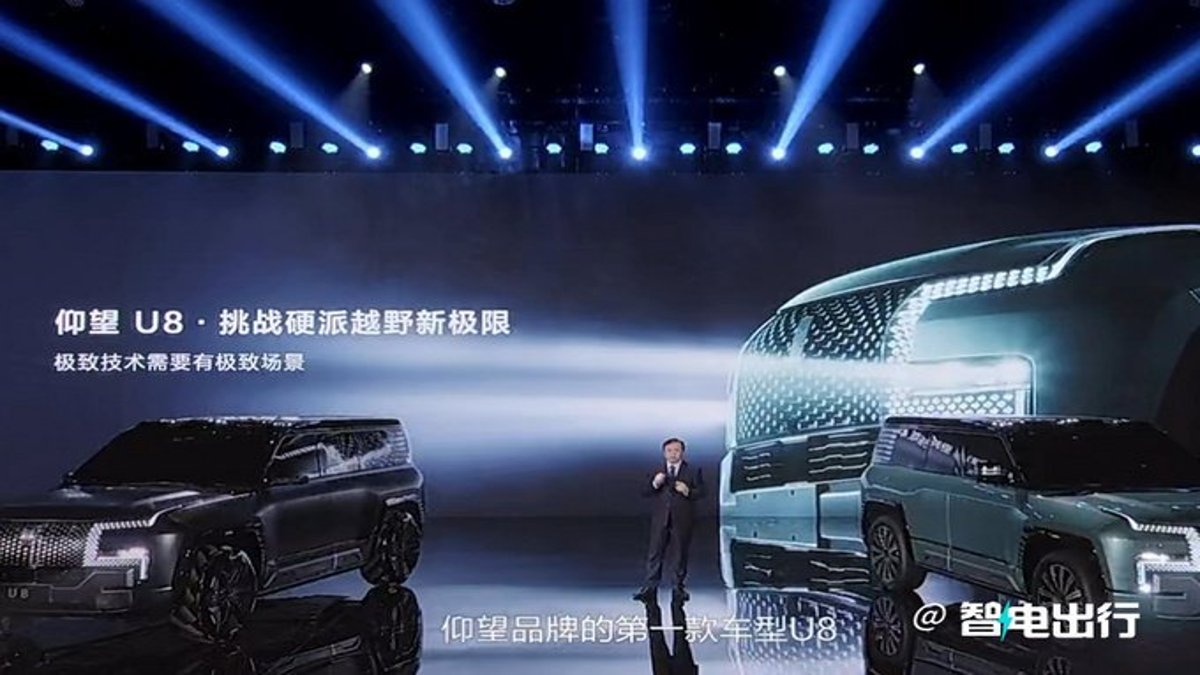
BYD launched the Yangwang sub-brand specifically to compete in the ultra-luxury SUV segment, directly targeting the Mercedes-Benz G-Class, Range Rover, and even the Rolls-Royce Cullinan. The U8 is the flagship model, priced at approximately $150,000 in China (around ¥1,098,000). For context, a Mercedes G-Class starts at $140,000 in the US, while a G63 AMG exceeds $180,000. BYD is positioning the U8 as a technologically superior alternative that offers capabilities no combustion-powered SUV can match--namely, the tank turn and floating mode.
Global expansion is already underway. The Yangwang U8 has been spotted testing in Europe, the Middle East, and Australia, with official launches expected in select markets by late 2026. BYD is leveraging its existing dealer network and partnerships with local distributors to establish Yangwang as a standalone luxury brand. The company is also investing heavily in marketing, including collaborations with luxury lifestyle brands and appearances at events like the Geneva Motor Show and Pebble Beach Concours d'Elegance.
Why does this matter for BYD's premium push? The Yangwang U8 serves as a halo car that demonstrates BYD's engineering prowess and brand ambition. If successful, it will pave the way for lower-priced Yangwang models (like the U9 supercar) and elevate the entire BYD brand perception. For consumers, the U8 represents a genuine alternative to established luxury SUVs--one that offers unique features, advanced technology, and a lower price point. However, challenges remain, including brand recognition, service network maturity, and residual value uncertainty. Early adopters will be rewarded with a vehicle that is unlike anything else on the road, but they must be comfortable with the risks associated with a new luxury entrant.
Final Verdict
When evaluating your options based on the information covered in this guide, consider your specific driving needs, budget, and long-term ownership expectations. The best choice is not always the most expensive or popular option, but the one that aligns with your daily driving patterns and personal preferences. Test drive or research multiple options before making a final decision.
Long-Term Ownership Considerations
Beyond the initial purchase decision, consider how your choice will serve you over the full ownership period. Factors like parts availability, insurance costs, fuel or electricity expenses, and resale value all contribute to the total cost of ownership that can significantly exceed the purchase price over five to seven years of driving. Vehicles with strong dealer networks and high production volumes typically offer lower maintenance costs and better parts availability. If you plan to keep the vehicle for more than five years, reliability data from sources like Consumer Reports and JD Power can provide valuable insights into potential problem areas that may not be apparent during a test drive or initial research.
Questions to Ask Before Making a Decision
Before finalizing your approach to the topic covered in this guide, consider a few key questions that will help you apply this information effectively. What is your primary goal, saving money, improving safety, increasing performance, or extending vehicle life? Understanding your priority helps you focus on the advice that matters most for your situation. What is your budget for any associated parts, tools, or professional services? Some recommendations may require an initial investment that pays for itself over time through reduced maintenance costs or improved fuel efficiency. What is your skill level and available time? Be honest about whether you can realistically perform the recommended tasks yourself or whether professional service is a better use of your time and provides better results. Answering these questions before taking action ensures you get the maximum benefit from the information presented here and avoid common mistakes that come from rushing into decisions without proper planning.
Additionally, consider consulting with a trusted mechanic or automotive professional who can provide personalized advice based on your specific vehicle make, model, and condition. While general guides like this one provide a solid foundation of knowledge, every vehicle has unique characteristics and potential issues that a professional who works on your specific model regularly can identify. Building a relationship with a reputable mechanic who communicates clearly and charges fair prices is one of the most valuable investments any car owner can make. If you do not already have a trusted mechanic, ask friends, family, or local community groups for recommendations, and visit a shop to observe their professionalism and cleanliness before committing to their services.