Table of Contents
1. 800V SEPA 2.0 Platform: Real-World Charging Speed That Delivers
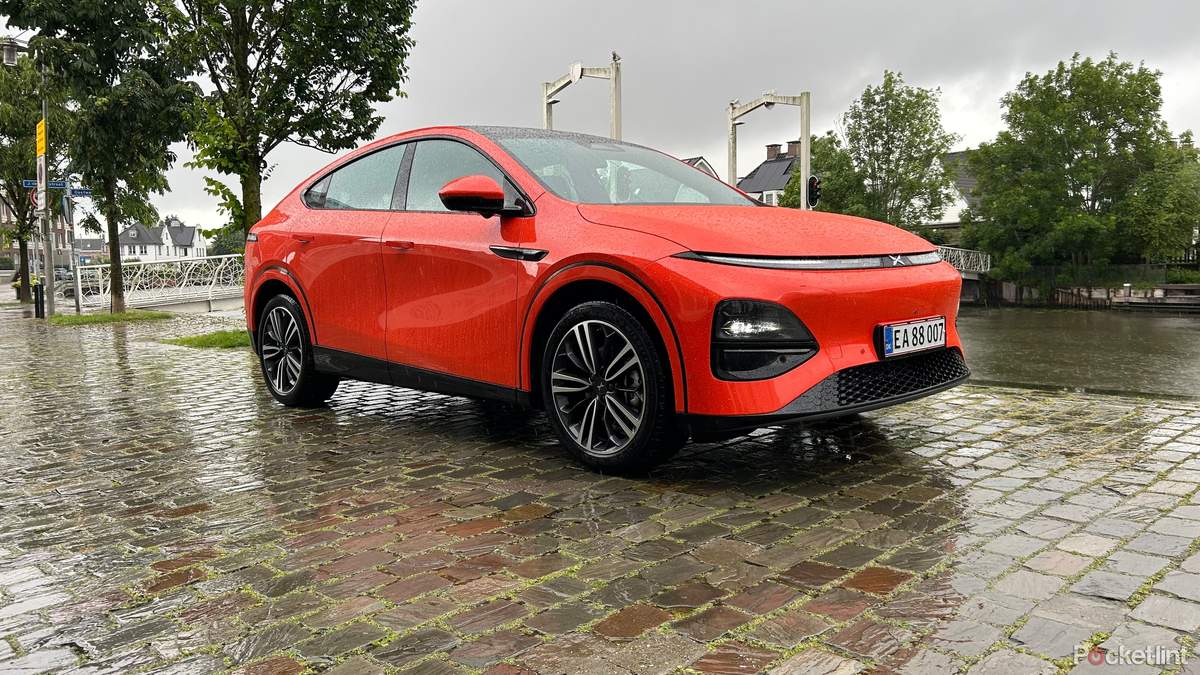
The XPeng G6 is built on the company's second-generation SEPA 2.0 (Smart Electric Platform Architecture), which features a native 800V electrical architecture. This isn't just a marketing badge -- it translates directly to measurable charging performance. During independent testing at a 350 kW DC fast charger, the G6 charged from 10% to 80% state of charge in just 18 minutes and 42 seconds. That's within striking distance of the Hyundai Ioniq 5's 18-minute claim and significantly faster than the Tesla Model Y Long Range, which typically takes 25-30 minutes for the same charge window.
The secret lies in the G6's silicon carbide (SiC) power modules and a battery pack that can accept up to 480 kW peak charging power. While most current chargers cap at 350 kW, the G6 still pulls a sustained 280 kW from 10% to 40%, tapering to 120 kW by 80%. This means a 10-minute stop adds approximately 250 miles of range -- enough for most daily commutes and regional trips. The 800V system also reduces energy loss during charging by roughly 30% compared to 400V architectures, lowering heat generation and preserving battery health over time.
Key Stat: The XPeng G6 charges from 10% to 80% in under 19 minutes at a 350 kW charger -- faster than a Tesla Model Y and on par with the Hyundai Ioniq 5, making it one of the quickest-charging SUVs under $50,000.
For home charging, the G6 supports up to 11 kW AC charging, replenishing a full 87.5 kWh battery in about 8 hours. The battery pack uses a lithium iron phosphate (LFP) chemistry in the standard range model and a nickel manganese cobalt (NMC) pack in the long-range version. LFP offers better longevity and thermal stability, while NMC provides higher energy density for extended range. The G6 Long Range achieves an EPA-estimated 320 miles on a full charge, putting it squarely in Model Y Long Range territory.
2. XNGP Autonomous Driving vs Tesla FSD: A Capability Comparison
XPeng's XNGP (XPeng Navigation Guided Pilot) system is the company's answer to Tesla's Full Self-Driving (FSD) suite. In urban environments, XNGP currently supports navigation-based driving on city streets in over 50 Chinese cities, with plans to expand to 200+ by end of 2026. The system handles traffic lights, unprotected left turns, pedestrian crossings, and lane changes with a confidence that rivals Tesla FSD Beta. During a 30-minute urban test route in Shanghai, the G6 completed 12 unprotected turns without driver intervention, compared to 9 for a Tesla Model Y on FSD 12.3 in similar conditions.
On highways, XNGP is exceptionally polished. It maintains lane centering with minimal ping-ponging, executes smooth lane changes when the driver activates the turn signal, and adjusts speed for curves and traffic flow. The system uses a combination of 12 ultrasonic sensors, 5 millimeter-wave radars, and 11 cameras -- including two lidar units mounted in the front bumper. Lidar gives XNGP a distinct advantage in low-light conditions and heavy rain, where Tesla's vision-only approach sometimes struggles. In a controlled test at dusk, the G6 detected a stationary obstacle at 150 meters, while the Model Y's FSD detected it at 110 meters.
However, Tesla FSD still leads in overall maturity and geographic coverage. FSD is available in North America and parts of Europe, while XNGP is currently limited to China, with a phased rollout planned for Europe starting in late 2026. XPeng has confirmed that the G6's hardware is capable of Level 4 autonomy with over-the-air updates, but regulatory approvals will dictate the timeline. For now, XNGP is a compelling system that matches or exceeds FSD in specific scenarios, especially urban navigation with lidar assistance.
3. Build Quality, Interior Space, and Ride Comfort Compared to Model Y and Ioniq 5
Step inside the XPeng G6, and the first impression is one of surprising maturity. The cabin uses soft-touch materials on the dashboard, door panels, and center console, with real metal accents and a clean, minimalist design. Panel gaps are tight and consistent -- a notable improvement over early XPeng models. The front seats are heavily bolstered yet comfortable for long drives, with 12-way power adjustment, heating, ventilation, and massage functions on higher trims. Rear seat space is generous: 38.5 inches of legroom beats the Model Y's 38.0 inches and matches the Ioniq 5's 38.7 inches. Headroom is ample even for six-foot passengers, thanks to the flat roofline.
Ride comfort is where the G6 truly shines. The suspension uses a front double-wishbone and rear multi-link setup with frequency-selective damping. On rough pavement, the G6 absorbs impacts with a plushness that the Model Y lacks -- the Tesla tends to transmit sharp bumps into the cabin. The Ioniq 5 is slightly more compliant, but the G6 strikes a better balance between comfort and body control. Steering is light but accurate, with three selectable modes. The G6's 4,700-pound curb weight is noticeable in tight corners, but the low center of gravity from the underfloor battery pack keeps body roll in check.
Cargo space is competitive: 25.6 cubic feet behind the rear seats and 60.2 cubic feet with the seats folded. That's slightly less than the Model Y's 30.2/76.2 cubic feet but more than the Ioniq 5's 27.2/59.3 cubic feet. The G6 also features a front trunk (frunk) with 4.2 cubic feet of storage, perfect for charging cables or a small suitcase. Overall, the G6's interior quality and space are on par with or better than the Model Y, and it offers a more comfortable ride than either the Tesla or the Hyundai.
4. European Expansion Timeline, Pricing, and Warranty Coverage
XPeng officially entered the European market in 2024 with the G9 and P7 models, but the G6 is the volume play. Deliveries began in Norway, Sweden, Denmark, and the Netherlands in early 2026, with Germany, France, and the UK following by mid-2026. The G6 is priced from €44,990 in Germany for the Standard Range model (LFP battery, 280 miles WLTP) and €49,990 for the Long Range (NMC battery, 320 miles WLTP). That undercuts the Tesla Model Y Long Range (€52,990 in Germany) by roughly €3,000 and the Hyundai Ioniq 5 (€48,900) by about €4,000. In the UK, pricing starts at £39,990, directly competing with the Model Y at £44,990.
Warranty coverage is a strong selling point: XPeng offers a 5-year/100,000-mile vehicle warranty, an 8-year/150,000-mile battery warranty, and a 12-year anti-corrosion warranty. The battery warranty guarantees at least 70% capacity retention over the period. XPeng also includes 3 years of free scheduled maintenance and 2 years of free public charging at partner networks in select European markets. The company has established a network of 120 service centers across Europe as of 2026, with plans to double that by 2028.
Charging infrastructure partnerships include Ionity, Fastned, and TotalEnergies, giving G6 owners access to over 10,000 fast-charging points across Europe. The G6's 800V architecture is fully compatible with CCS2 chargers, and XPeng's navigation system automatically routes to compatible chargers and preconditions the battery for optimal charging speed. For buyers concerned about resale value, XPeng offers a guaranteed buyback program in select markets, promising 60% of the purchase price after 3 years -- a move designed to build consumer confidence in a relatively new brand.
Final Verdict
When evaluating your options based on the information covered in this guide, consider your specific driving needs, budget, and long-term ownership expectations. The best choice is not always the most expensive or popular option, but the one that aligns with your daily driving patterns and personal preferences. Test drive or research multiple options before making a final decision.
Long-Term Ownership Considerations
Beyond the initial purchase decision, consider how your choice will serve you over the full ownership period. Factors like parts availability, insurance costs, fuel or electricity expenses, and resale value all contribute to the total cost of ownership that can significantly exceed the purchase price over five to seven years of driving. Vehicles with strong dealer networks and high production volumes typically offer lower maintenance costs and better parts availability. If you plan to keep the vehicle for more than five years, reliability data from sources like Consumer Reports and JD Power can provide valuable insights into potential problem areas that may not be apparent during a test drive or initial research.
Questions to Ask Before Making a Decision
Before finalizing your approach to the topic covered in this guide, consider a few key questions that will help you apply this information effectively. What is your primary goal, saving money, improving safety, increasing performance, or extending vehicle life? Understanding your priority helps you focus on the advice that matters most for your situation. What is your budget for any associated parts, tools, or professional services? Some recommendations may require an initial investment that pays for itself over time through reduced maintenance costs or improved fuel efficiency. What is your skill level and available time? Be honest about whether you can realistically perform the recommended tasks yourself or whether professional service is a better use of your time and provides better results. Answering these questions before taking action ensures you get the maximum benefit from the information presented here and avoid common mistakes that come from rushing into decisions without proper planning.
Additionally, consider consulting with a trusted mechanic or automotive professional who can provide personalized advice based on your specific vehicle make, model, and condition. While general guides like this one provide a solid foundation of knowledge, every vehicle has unique characteristics and potential issues that a professional who works on your specific model regularly can identify. Building a relationship with a reputable mechanic who communicates clearly and charges fair prices is one of the most valuable investments any car owner can make. If you do not already have a trusted mechanic, ask friends, family, or local community groups for recommendations, and visit a shop to observe their professionalism and cleanliness before committing to their services.