Table of Contents
Design and Engineering: A Global Team's Masterpiece
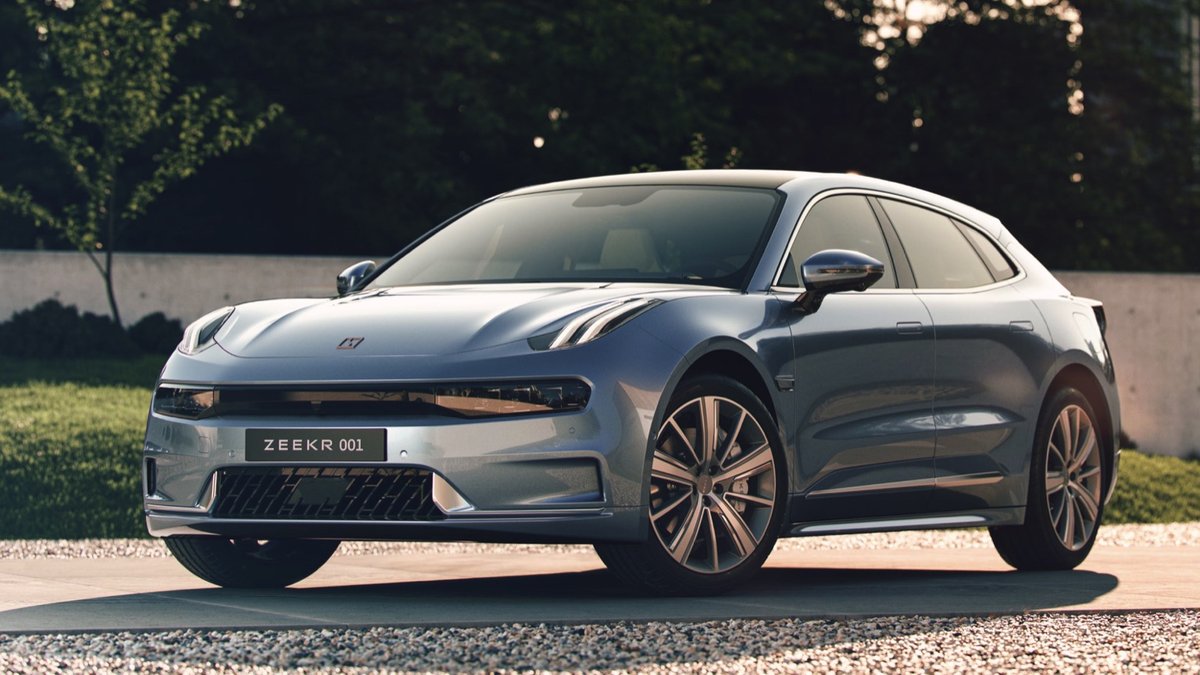
The Zeekr 001 is not just another Chinese EV; it is a statement of intent from Geely, the automotive conglomerate that also owns Volvo, Polestar, and Lotus. Designed under the leadership of former Audi and Bentley designers, the 001's shooting brake body style is a deliberate departure from the ubiquitous SUV and sedan shapes. The low, wide stance with a long wheelbase (3,005 mm) gives it a planted, almost coupe-like profile, while the steeply raked rear hatch provides the practicality of a wagon. The front fascia features a distinctive 'fanged' LED daytime running light signature and a closed-off grille that emphasizes its electric nature. Aerodynamics are optimized with a drag coefficient of just 0.26 Cd, contributing to both range and high-speed stability.
Underpinning the 001 is Geely's Sustainable Experience Architecture (SEA), a dedicated EV platform that also supports the Polestar 4 and Smart #1. This modular architecture allows for a low center of gravity, near-perfect 50:50 weight distribution, and a flat floor that maximizes interior space. The body structure uses a mix of high-strength steel and aluminum, achieving a torsional rigidity of 40,000 Nm/deg -- figures that rival the Porsche Taycan and Tesla Model S. The suspension setup is equally ambitious: double wishbones at the front and a multi-link arrangement at the rear, with optional air suspension and adaptive dampers that can adjust ride height by up to 50 mm. This engineering foundation is what enables the 001 to deliver a driving experience that challenges established German premium brands.
Key Stat: The Zeekr 001's torsional rigidity of 40,000 Nm/deg is on par with the Porsche Taycan, providing a rock-solid foundation for both ride comfort and dynamic handling.
Dual-Motor Performance: 0-60 in 3.8 Seconds and a 400-Mile Range
The Zeekr 001 is offered in several powertrain configurations, but the flagship dual-motor all-wheel-drive version is the one that truly challenges the Porsche Taycan Cross Turismo. Two permanent magnet synchronous motors produce a combined 536 horsepower and 506 lb-ft of torque. This propels the 001 from 0 to 60 mph in just 3.8 seconds, placing it squarely in the same performance bracket as the Taycan 4S Cross Turismo (3.9 seconds) and the Tesla Model Y Performance (3.5 seconds). The instant torque delivery is linear and relentless, with no noticeable lag from the electric motors. The 001 also features a 'Launch Control' mode that pre-conditions the battery and optimizes torque distribution for maximum acceleration.
Range is a critical factor for any premium EV, and the Zeekr 001 delivers with a 100 kWh nickel-manganese-cobalt (NMC) battery pack that provides an estimated EPA range of 400 miles (645 km) on the dual-motor model. This is achieved through a combination of the efficient SEA platform, the low drag coefficient, and a heat pump that optimizes energy use in cold weather. The 800-volt architecture enables ultra-fast charging: from 10% to 80% in just 22 minutes using a 350 kW DC fast charger. This charging speed is on par with the Porsche Taycan's 800-volt system and significantly faster than most Tesla Superchargers. The 001 also supports 22 kW AC charging for home or workplace top-ups, making it a practical daily driver for those with access to high-power charging infrastructure.
Interior Quality and Tech: A Cabin That Rivals the Germans
Step inside the Zeekr 001, and the premium aspirations are immediately apparent. The cabin is swathed in soft-touch materials, including Nappa leather, microsuede, and real metal accents. The seats are heavily bolstered, offering 12-way power adjustment, heating, ventilation, and massage functions for both front occupants. The rear seats are equally spacious, with generous legroom and headroom despite the sloping roofline. The panoramic glass roof, which spans the entire length of the cabin, floods the interior with natural light and enhances the sense of airiness. The fit and finish are on par with a BMW 5 Series or Mercedes-Benz E-Class, with tight panel gaps and high-quality switchgear that feels solid and damped.
The technology suite is centered around a 15.4-inch floating touchscreen that runs Zeekr's proprietary OS, which is based on Qualcomm's Snapdragon 8155 chip. The interface is responsive, with crisp graphics and intuitive menus. Wireless Apple CarPlay and Android Auto are standard, as is a 14-speaker Yamaha premium audio system. The digital instrument cluster is a 8.8-inch display that can be configured to show navigation, driving data, or a minimalist view. Augmented reality head-up display projects navigation arrows and speed warnings onto the windshield. The driver assistance suite includes adaptive cruise control with stop-and-go, lane centering, automatic emergency braking, and a 360-degree camera system. While not as advanced as Tesla's Full Self-Driving, the Zeekr 001's ADAS is smooth and reliable for highway driving, with natural lane changes and gentle braking inputs.
European Market Pricing: Undercutting German Premium by 30-40%
The Zeekr 001's most disruptive attribute is its pricing. In Europe, the dual-motor version starts at approximately €59,000 (about $64,000 USD) before incentives. This positions it directly against the Porsche Taycan Cross Turismo, which starts at €95,000 ($103,000) -- a price difference of nearly 40%. Even when compared to the Audi Q6 e-tron or BMW i5 Touring, the Zeekr 001 undercuts them by 30-35% while offering comparable or superior performance and range. This aggressive pricing is made possible by Geely's vertically integrated supply chain, low manufacturing costs in China, and the absence of legacy dealer networks. The 001 is sold directly to consumers through Zeekr's own online platform and a growing network of 'Zeekr Centers' in major European cities.
However, there are trade-offs. The Zeekr 001 does not yet have the brand cachet of Porsche or BMW, and resale values are unproven in Western markets. Service and parts availability are still ramping up, with Zeekr promising a network of 100 service points across Europe by the end of 2026. The warranty is competitive: 5 years or 100,000 miles for the vehicle, and 8 years or 150,000 miles for the battery. Early adopters will benefit from a comprehensive over-the-air update strategy that continuously improves the vehicle's features and performance. For buyers who prioritize substance over badge prestige, the Zeekr 001 offers a compelling value proposition that is hard to ignore. It is a genuine alternative to the German premium establishment, and one that deserves serious consideration from anyone shopping in the $60,000-$80,000 EV segment.
Conclusion: The New Benchmark for Value in Premium EVs
The Zeekr 001 is a remarkable achievement. It combines world-class design, exhilarating performance, a luxurious interior, and advanced technology at a price that undercuts its German rivals by a significant margin. While it may lack the brand heritage of Porsche or BMW, it more than makes up for it with substance and value. The 001 is not a compromise; it is a genuine contender that redefines what a premium electric vehicle can be. For US consumers, the Zeekr 001 is expected to arrive in late 2026 or early 2027, pending regulatory approvals and tariff negotiations. If it launches at a similar price point, it could be one of the most compelling EV purchases on the market. The Zeekr 001 proves that Geely is not just a Chinese automaker -- it is a global force that is reshaping the automotive landscape.
Final Verdict
When evaluating your options based on the information covered in this guide, consider your specific driving needs, budget, and long-term ownership expectations. The best choice is not always the most expensive or popular option, but the one that aligns with your daily driving patterns and personal preferences. Test drive or research multiple options before making a final decision.
Long-Term Ownership Considerations
Beyond the initial purchase decision, consider how your choice will serve you over the full ownership period. Factors like parts availability, insurance costs, fuel or electricity expenses, and resale value all contribute to the total cost of ownership that can significantly exceed the purchase price over five to seven years of driving. Vehicles with strong dealer networks and high production volumes typically offer lower maintenance costs and better parts availability. If you plan to keep the vehicle for more than five years, reliability data from sources like Consumer Reports and JD Power can provide valuable insights into potential problem areas that may not be apparent during a test drive or initial research.
Questions to Ask Before Making a Decision
Before finalizing your approach to the topic covered in this guide, consider a few key questions that will help you apply this information effectively. What is your primary goal, saving money, improving safety, increasing performance, or extending vehicle life? Understanding your priority helps you focus on the advice that matters most for your situation. What is your budget for any associated parts, tools, or professional services? Some recommendations may require an initial investment that pays for itself over time through reduced maintenance costs or improved fuel efficiency. What is your skill level and available time? Be honest about whether you can realistically perform the recommended tasks yourself or whether professional service is a better use of your time and provides better results. Answering these questions before taking action ensures you get the maximum benefit from the information presented here and avoid common mistakes that come from rushing into decisions without proper planning.
Additionally, consider consulting with a trusted mechanic or automotive professional who can provide personalized advice based on your specific vehicle make, model, and condition. While general guides like this one provide a solid foundation of knowledge, every vehicle has unique characteristics and potential issues that a professional who works on your specific model regularly can identify. Building a relationship with a reputable mechanic who communicates clearly and charges fair prices is one of the most valuable investments any car owner can make. If you do not already have a trusted mechanic, ask friends, family, or local community groups for recommendations, and visit a shop to observe their professionalism and cleanliness before committing to their services.