Table of Contents
Modern cars are safer than ever, thanks to a suite of advanced driver-assistance systems (ADAS) that help prevent accidents before they happen. While no technology can replace an attentive driver, these five features are proven to reduce crash risk and save lives. Read on to understand how they work and why they should be on your must-have list.
1. Automatic Emergency Braking (AEB)
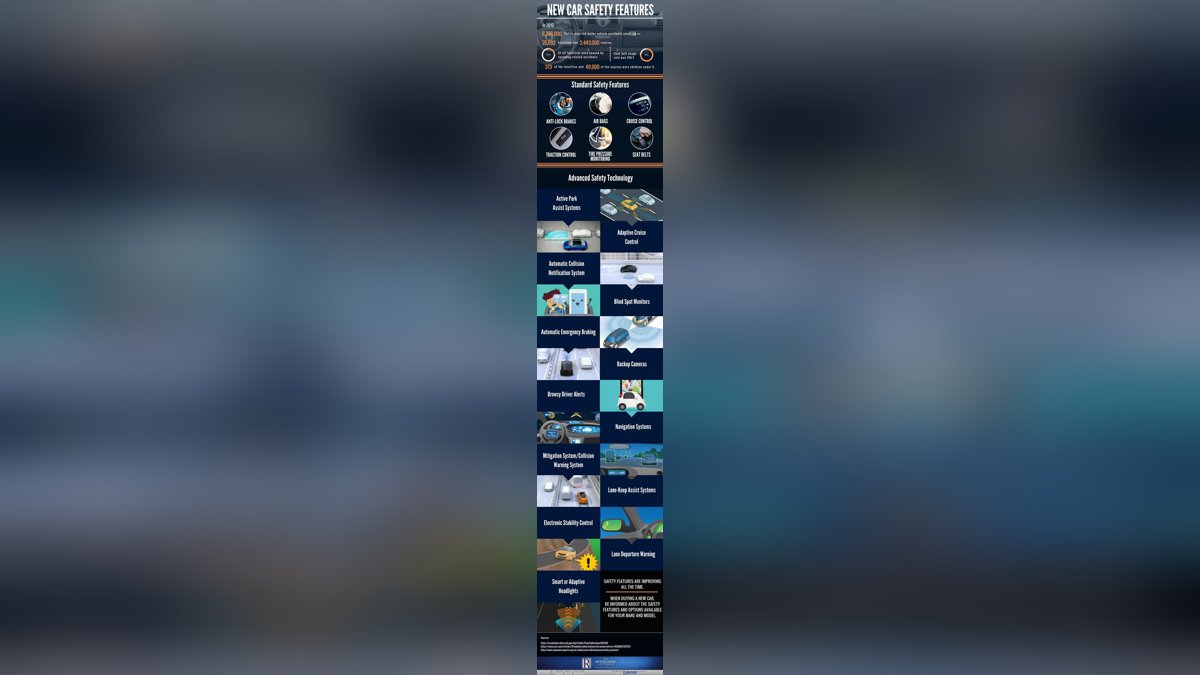
Automatic Emergency Braking uses sensors, cameras, or radar to detect an imminent collision with a vehicle or obstacle. If the driver does not react in time, the system automatically applies the brakes to avoid or mitigate the impact. AEB is particularly effective at preventing rear-end collisions, which account for nearly a third of all crashes. Systems vary in sophistication - some only work at low speeds (city AEB), while others operate at highway speeds and can even detect pedestrians or cyclists.
According to the Insurance Institute for Highway Safety (IIHS), vehicles equipped with AEB reduce rear-end crashes by up to 50%.
Starting in 2022, most major automakers voluntarily committed to making AEB standard on all new vehicles by 2025, and many models now include pedestrian detection as well. When shopping for a used car, prioritize models with AEB - it could be the most important safety feature you never notice until you need it. Even basic systems can dramatically reduce accident severity.
2. Lane Keeping Assist (LKA)
Lane Keeping Assist uses cameras to track lane markings on the road. If the vehicle begins to drift out of its lane without a turn signal, the system gently corrects the steering or applies brake torque to guide the car back. This feature addresses lane-departure crashes, often caused by driver distraction or drowsiness. Note the difference between lane departure warning (LDW) - which only alerts the driver - and active lane keeping, which actually intervenes.
According to the National Highway Traffic Safety Administration (NHTSA), lane-departure warnings reduce single-vehicle, sideswipe, and head-on crashes by about 11%. Combining LDW with active lane-keeping boosts effectiveness. Some vehicles offer lane centering, which continuously keeps the car in the middle of the lane - a step toward semi-autonomous driving. However, LKA performs best on well-marked highways and may struggle in rain, snow, or faded lanes.
3. Blind Spot Monitoring (BSM)
Blind spot monitoring uses radar or ultrasonic sensors in the rear bumper to detect vehicles in adjacent lanes that may be hidden from the driver's mirrors. When a vehicle is detected, a visual warning (usually an icon in the side mirror or a light on the pillar) alerts the driver. Some systems also provide an audible or haptic warning if you signal a lane change while a vehicle is in your blind spot.
The IIHS reports that blind spot detection can reduce lane-change crashes by as much as 14%. Combined with rear cross-traffic alert - which warns of vehicles approaching from the sides when reversing - BSM is one of the most practical features for daily driving. It is especially valuable in larger vehicles like SUVs and trucks where blind spots are more pronounced. Backup cameras are now mandatory, but BSM covers areas your mirrors simply can't see.
When combined, these ADAS features create a cohesive safety net that addresses the most common crash scenarios. Sensor fusion technology—where radar, cameras, and ultrasonic sensors share data—enables features like cross-traffic alert that would be impossible with any single sensor type. For example, if your blind spot monitor detects a vehicle while your lane keeping assist senses you drifting, the system can provide both visual and haptic warnings to prevent a potential sideswipe collision. This layered approach is why modern vehicles with comprehensive ADAS packages consistently earn top safety ratings from IIHS and Euro NCAP.
4. Adaptive Cruise Control (ACC)
Adaptive cruise control is an evolution of standard cruise control that automatically adjusts your vehicle's speed to maintain a safe following distance from the car ahead. Using radar or laser sensors, ACC can slow down or accelerate to match traffic flow. Many systems now include stop-and-go functionality, bringing the car to a complete stop and resuming when traffic moves - dramatically reducing stress in heavy congestion.
Studies by the University of Michigan Transportation Research Institute found that ACC can reduce speed-related crash risk by up to 20%. However, lower-cost systems may only operate above 20 mph, so check the specifics before purchase. When ACC is combined with lane centering, it forms a Level 2 autonomous driving system (like Tesla Autopilot or GM Super Cruise). While effective, drivers must remain engaged because ACC may not respond well to stationary objects, motorcycles, or sudden cut-ins.
Looking ahead, vehicle-to-everything (V2X) communication promises to extend safety beyond what onboard sensors can detect. By 2028, many new cars will be able to receive alerts about accidents, road hazards, or emergency vehicles approaching from a mile away—even around blind corners. Combined with AI-based predictive analytics that learn your driving patterns, future safety systems will not only react to dangers but anticipate them before they appear. Automakers like Volvo, Mercedes-Benz, and Ford are already testing Level 3 systems that shift responsibility from driver to vehicle in specific conditions, marking a fundamental shift in automotive safety philosophy.
5. Driver Monitoring Systems (DMS)
The newest addition to the ADAS lineup is driver monitoring. Using an infrared camera focused on the driver's face, DMS tracks eye movements, head position, and blink rate to detect signs of distraction or drowsiness. If it determines you are not paying attention - looking at your phone, yawning excessively, or closing your eyes - the system issues escalating alerts and may even slow the vehicle if the driver fails to respond.
Starting with the 2024 model year, European safety regulators require driver monitoring for vehicles with automated driving features. In the U.S., NHTSA is studying mandatory DMS to combat the rising problem of distracted driving. Some advanced systems can recognize if you're eating, smoking, or using a phone and may disable certain in-car functions. As autonomous driving levels increase, DMS will become essential for ensuring humans remain ready to take over when needed.
These five safety features are no longer just luxury extras - they are becoming standard equipment on new cars and are proven to reduce crashes. When you're shopping for your next vehicle, prioritize models that include AEB, LKA, BSM, ACC, and ideally DMS. They might cost a little more upfront, but the potential savings in accident avoidance - and lives saved - are immeasurable.
How Safety Features Work Together
Modern vehicle safety is not about individual features working in isolation but about a coordinated system that protects you from multiple angles. Camera-based systems feed data to lane departure warnings, automatic emergency braking, and traffic sign recognition simultaneously. Radar sensors handle adaptive cruise control and blind spot monitoring, while ultrasonic sensors manage parking assistance. When these systems are integrated properly, they can intervene at different stages of a potential collision: first by warning the driver, then by pre-charging the brakes, and finally by applying full braking force if no action is taken. Understanding how these layers work together helps you trust the technology without becoming over-reliant on it. The driver remains ultimately responsible, but the safety net beneath you has never been more comprehensive.
The Future of Automotive Safety Technology
Vehicle-to-everything (V2X) communication represents the next frontier in automotive safety. This technology allows vehicles to communicate with each other and with traffic infrastructure like traffic lights and road signs. A car approaching an intersection could receive a warning from another vehicle running a red light, or a traffic light could broadcast its timing schedule so approaching vehicles can adjust speed to avoid unnecessary stops. While fully autonomous driving remains years away from widespread adoption, the safety technologies that pave the way for it are already saving lives. According to the Insurance Institute for Highway Safety, vehicles equipped with forward collision warning and automatic emergency braking have 50 percent fewer rear-end collisions. As these technologies become standard equipment on even entry-level vehicles, the overall safety of our roads will continue to improve.
How Safety Features Work Together
Modern vehicle safety is not about individual features working in isolation but about a coordinated system that protects you from multiple angles. Camera-based systems feed data to lane departure warnings, automatic emergency braking, and traffic sign recognition simultaneously. Radar sensors handle adaptive cruise control and blind spot monitoring, while ultrasonic sensors manage parking assistance. When these systems are integrated properly, they can intervene at different stages of a potential collision: first by warning the driver, then by pre-charging the brakes, and finally by applying full braking force if no action is taken. Understanding how these layers work together helps you trust the technology without becoming over-reliant on it. The driver remains ultimately responsible, but the safety net beneath you has never been more comprehensive.
Maintaining Your Vehicle Safety Systems
Your vehicle safety systems require minimal maintenance, but a few simple practices keep them functioning correctly. The windshield area in front of the forward-facing camera, typically located near the rearview mirror, must remain clean and free of cracks or chips. If your windshield needs replacement, ensure the new glass is compatible with your vehicle camera-based safety systems. Radar sensors, usually located behind the front grille, can become misaligned after even a minor front-end collision. If you notice your adaptive cruise control or forward collision warning behaving erratically after any front-end impact, have the radar sensor recalibrated. Parking sensors and camera lenses should be cleaned regularly, as mud or snow buildup can render them effectively useless.