Table of Contents
- 1. Electric-Only Range: The Biggest Deciding Factor
- 2. Charging Requirements: Gas Station vs. Wall Outlet
- 3. Driving Experience and Performance Characteristics
- 4. Total Ownership Costs and Incentives
- 5. Fuel Economy and Real-World Efficiency
- 6. Environmental Impact and Emissions
- 7. Which One Should You Buy in 2026?
With fuel prices volatile and emission regulations tightening, more buyers than ever are considering electrified powertrains. Two of the most popular options - conventional hybrids (HEVs) and plug-in hybrids (PHEVs) - often get lumped together, but they serve very different lifestyles. Understanding the gap between these technologies can save you thousands of dollars and a lot of daily hassle. After testing more than a dozen 2026 models across both categories, we've identified the seven critical distinctions that matter most to buyers.
According to the U.S. Department of Energy, plug-in hybrids can achieve fuel economy equivalent to over 100 MPGe when driven primarily on electric power, while conventional hybrids typically max out around 50-60 MPG in combined driving.
1. Electric-Only Range: The Biggest Deciding Factor
The most obvious difference lies in how far each can travel without burning a drop of gasoline. A conventional hybrid like the 2026 Toyota Camry Hybrid has a small battery pack (usually 1-2 kWh) that provides electric assist only at low speeds or during acceleration. It can creep for about a mile at most before the gasoline engine kicks in.
In contrast, plug-in hybrids carry much larger batteries, typically 10-18 kWh, allowing for meaningful all-electric range. The 2026 Ford Escape PHEV, for example, offers an EPA-rated 37 miles of EV driving. That's enough for the average daily commute without ever using gas. If you have a short, predictable drive, a PHEV essentially becomes an EV for 90% of your trips.
2. Charging Requirements: Gas Station vs. Wall Outlet
HEVs never need to be plugged in. The battery is charged exclusively through regenerative braking and the gasoline engine, making them as convenient as any traditional car. Fill up at the pump and go.
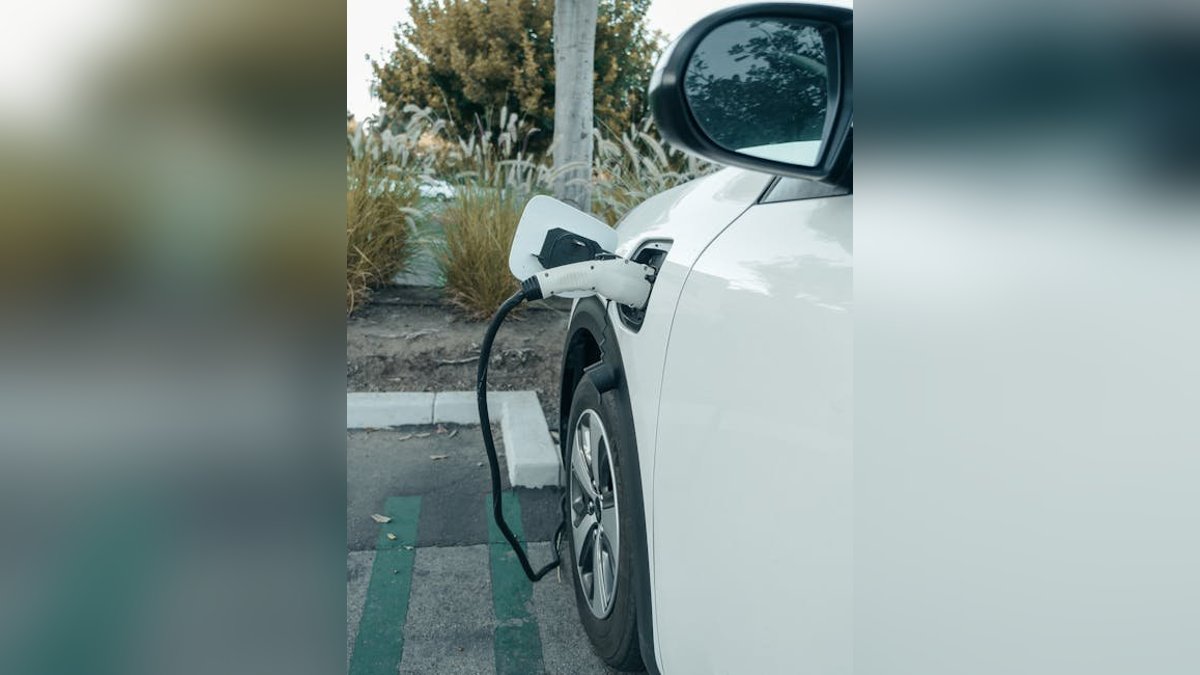
PHEVs require a charging source to realize their efficiency benefits. A standard 120V household outlet will charge a typical PHEV battery in 5-7 hours overnight. For faster charging, a Level 2 charger (240V) cuts that time to 2-3 hours. If you don't have a garage or easy access to charging, a PHEV loses much of its advantage and starts behaving like a heavier, less efficient hybrid.
AutoPulse testing found that PHEV owners with home charging saved an average of $720 per year in fuel costs compared to non-charging owners, based on 2026 gasoline prices.
3. Driving Experience and Performance Characteristics
Both types share a similar feel in city traffic - quiet, smooth, and surprisingly punchy from a standstill thanks to instant electric torque. However, the larger battery in a PHEV provides more sustained electric power, resulting in stronger acceleration in the 0-40 mph range and a more responsive passing feel on highways.
Conventional hybrids tend to have a more noticeable transition between electric and gas propulsion. The engine can drone under heavy load, especially in older models like the 2023 Honda Insight. Many 2026 hybrids, such as the Hyundai Elantra Hybrid, have refined this with better insulation and smoother CVT tuning. Still, if you want true EV-like silence for a 30-mile drive, only a PHEV (or full EV) delivers.
4. Total Ownership Costs and Incentives
Upfront, hybrids are cheaper than plug-ins. A 2026 Toyota RAV4 Hybrid starts around $32,000, while the RAV4 Prime (PHEV) begins near $43,000. That $11,000 gap can be daunting. However, federal tax credits for PHEVs still apply in 2026 (up to $4,000 depending on battery sourcing), which narrows the gap to around $7,000.
Maintenance costs also diverge. Hybrids have simpler cooling and power electronics, while PHEVs add a high-voltage charger and larger battery coolant loops. Over 10 years, AAA estimates PHEV maintenance runs about $800 more than a comparable hybrid. Battery replacement - if needed after 8-10 years - costs $2,000-$4,000 for a hybrid pack and $4,000-$8,000 for a plug-in pack.
5. Fuel Economy and Real-World Efficiency
On paper, PHEVs boast higher MPGe ratings because of their electric miles, but real-world efficiency depends entirely on driving habits. If you plug in daily and keep trips short, a PHEV can achieve 100+ MPGe. On a long highway trip without charging, fuel economy drops to roughly the same as a conventional hybrid (38-45 MPG).
A regular hybrid provides consistent efficiency regardless of route. The 2026 Hyundai Santa Fe Hybrid, for instance, returns 37 MPG combined whether you're driving across town or cross-country. The predictability appeals to road trippers who don't want to worry about charging infrastructure.
6. Environmental Impact and Emissions
Both reduce tailpipe emissions compared to pure gasoline cars. A hybrid cuts CO2 by about 30% vs. a conventional car, while a well-utilized PHEV can reduce emissions by 60-80% if most miles are electric. But the environmental equation also includes battery production. PHEV batteries are 5-10 times larger than hybrid batteries, requiring more raw materials and energy to manufacture.
A 2026 life-cycle analysis from the Argonne National Laboratory found that a plug-in hybrid driven 70% on electricity has a 20% lower lifetime carbon footprint than a hybrid driven entirely on gasoline. The advantage narrows in regions with a dirty electric grid.
7. Which One Should You Buy in 2026?
Choose a conventional hybrid if: you don't have reliable access to charging, you take frequent long trips, or you want the lowest upfront cost and simplest ownership experience. They're ideal for apartment dwellers or anyone who values hassle-free operation.
Choose a plug-in hybrid if: you have a home charger, your daily commute is under 35 miles, and you want to slash gas bills while retaining long-range flexibility. PHEVs also qualify for HOV lane access in many states, a perk worth considering in congested metro areas like Los Angeles or Chicago.
Both technologies will remain crucial in the transition to zero-emission vehicles. Each serves a distinct purpose for different driver needs and lifestyles. In many ways, a PHEV is the best of both worlds - an EV for the week and a hybrid for the weekend. But only if you plug it in. Carefully evaluating your daily driving habits, home charging options, and budget will help you choose the right electrified powertrain for your lifestyle.
Which Powertrain Fits Your Lifestyle
Choosing between a hybrid, plug-in hybrid, and traditional gasoline vehicle depends heavily on your daily driving patterns and access to charging. If your commute is under 30 miles round trip and you have a garage or driveway where you can install a Level 1 charger, a plug-in hybrid offers the best of both worlds. You can complete most daily trips on electric power alone, consuming no gasoline, while retaining the ability to drive hundreds of miles on a tank of fuel for road trips without worrying about charging station availability. A standard hybrid is the better choice if you do most of your driving at highway speeds, where the fuel economy advantage of electrification is smaller but still meaningful. Drivers who rent their homes or park on the street may find plug-in charging impractical, making a standard hybrid a more realistic stepping stone toward electrification.
Total Cost of Ownership Comparison
When calculating the financial impact of your powertrain choice, the purchase price is only the beginning. A plug-in hybrid typically costs $4,000 to $8,000 more than its gasoline equivalent, and a standard hybrid adds $2,000 to $4,000. Federal and state tax incentives can offset some of this premium for plug-in hybrids, though eligibility varies by model and location. On the operating cost side, plug-in hybrids can reduce fuel spending by 40 to 60 percent compared to a conventional vehicle if you charge regularly, while standard hybrids save 25 to 35 percent without any charging required. Maintenance costs for hybrids are generally lower than gasoline vehicles because regenerative braking reduces brake pad wear, and the engine runs less frequently. However, hybrid battery replacement, though rarely needed before 150,000 miles, can cost $2,000 to $6,000 if it becomes necessary. Factor these numbers into your budget alongside your expected ownership period.
Charging Infrastructure for Plug-In Hybrids
One concern that holds buyers back from choosing a plug-in hybrid is the perceived complexity of charging. The reality is far simpler than most people expect. Every plug-in hybrid comes with a Level 1 charging cable that plugs into any standard 120-volt household outlet, delivering about 3 to 5 miles of range per hour of charging. A typical plug-in hybrid with 25 to 40 miles of electric range can be fully charged overnight. If you have a 240-volt Level 2 charger installed at home, charging time drops to about two to four hours. Public charging stations are also widely available and most plug-in hybrids can accept Level 2 charging speeds. Many employers now offer workplace charging, which can effectively double your electric driving range if you charge during the workday.
Resale Value and Long-Term Ownership
Resale value is an important factor when choosing between powertrains. Standard hybrids have the strongest resale value, as the technology is mature and the battery pack is known to last the life of the vehicle in most cases. Plug-in hybrids have more variable resale value because the larger battery pack is a known replacement cost. However, most manufacturers warranty plug-in hybrid batteries for 8 to 10 years or 100,000 to 150,000 miles. Conventional gasoline vehicles generally depreciate faster than hybrids but have lower upfront costs. For long-term owners planning to keep the vehicle for eight to ten years, the fuel savings from a hybrid or plug-in hybrid accumulate significantly, often offsetting the higher initial purchase price well before the vehicle reaches the end of its useful life.