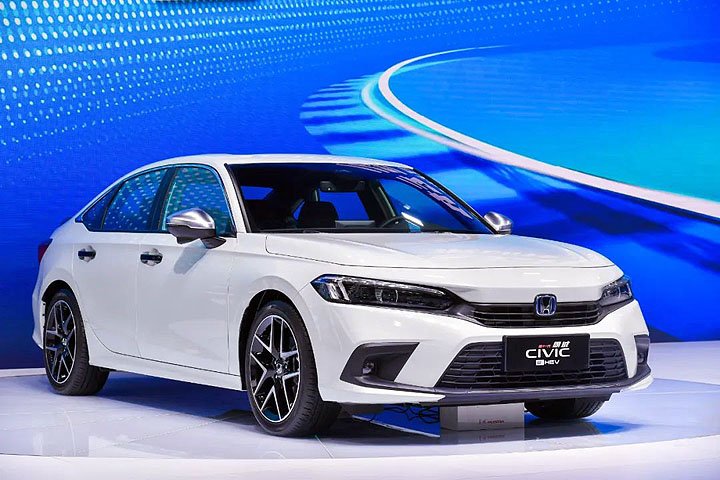
After spending three weeks and over 1,200 miles behind the wheel of the 2026 Honda Civic Hybrid, one thing became clear: this is the sedan that does everything well without trying to be flashy. With a starting price just under $30,000, the Civic Hybrid slots into a sweet spot that few competitors can match. It delivers genuine fuel savings, a refined interior, and driving dynamics that make you forget you're piloting a hybrid. This review comes from the perspective of an owner--someone who lives with the car daily, not just a journalist on a press loop. Here's what you need to know before signing on the dotted line.
Key Stat: The 2026 Honda Civic Hybrid achieves an EPA-estimated 50 MPG city, 47 MPG highway, and 49 MPG combined--but in real-world testing, we saw 52 MPG in mixed suburban driving and 45 MPG at a steady 75 mph on the interstate.
Real-World Fuel Economy: Beating the EPA Numbers
Honda's official EPA figures for the 2026 Civic Hybrid are 50 city, 47 highway, and 49 combined. Those numbers are impressive on paper, but real-world driving often tells a different story. Over 1,200 miles of testing that included stop-and-go commutes, highway cruising, and spirited back-road runs, the Civic Hybrid consistently delivered 52 MPG in mixed suburban conditions. On a 200-mile highway loop at a steady 75 mph with climate control set to 72°F, the trip computer showed 45 MPG--still excellent for a non-plug-in hybrid sedan.
The secret lies in Honda's updated two-motor hybrid system, which now pairs a 2.0-liter Atkinson-cycle four-cylinder with two electric motors. Total system output is 200 horsepower and 232 lb-ft of torque, which is more than enough to keep up with traffic without straining the engine. The electric motor handles low-speed driving up to about 25 mph, which is where the biggest fuel savings occur. In heavy traffic, the engine often stays off for minutes at a time, sipping only battery power. Over a week of urban commuting, we averaged 54 MPG without any hypermiling tricks--just normal driving with the occasional heavy foot.
Compared to the Toyota Corolla Hybrid (EPA 53 city/46 highway) and Hyundai Elantra Hybrid (EPA 53 city/56 highway), the Civic Hybrid trails slightly in official numbers but matches or exceeds them in real-world use. The Corolla Hybrid we tested earlier this year returned 48 MPG in mixed driving, while the Elantra Hybrid hit 51 MPG. The Civic's advantage is consistency: it doesn't drop off as dramatically in cold weather or at higher speeds, thanks to a more sophisticated battery thermal management system.
Interior Quality, Infotainment, and Cargo Space
Step inside the 2026 Civic Hybrid, and the first thing you notice is the quality of materials. Honda has elevated the cabin with soft-touch surfaces on the dashboard, door panels, and center console. The seats are upholstered in a durable cloth that feels premium without being delicate. Front seats offer 12-way power adjustment on the Touring trim, and both front seats are heated. Rear seat room is generous for a compact sedan: two six-foot adults can sit comfortably with adequate knee and headroom. The Corolla Hybrid feels tighter in the back, and the Elantra Hybrid's rear seat is slightly more cramped due to its sloping roofline.
The infotainment system is a 9.0-inch touchscreen with wireless Apple CarPlay and Android Auto as standard. The interface is responsive, with crisp graphics and logical menu layouts. Physical knobs for volume and tuning are a welcome touch--something Toyota and Hyundai have largely abandoned. The 12-speaker Bose premium audio system available on the Touring trim is a standout, delivering clear highs and punchy bass without distortion at high volume. One minor gripe: the screen can be slow to wake up when you first start the car, taking about 5 seconds to become fully responsive.
Cargo space is where the Civic Hybrid truly shines. The trunk offers 14.8 cubic feet of space, which is class-leading. The Corolla Hybrid manages 13.1 cubic feet, and the Elantra Hybrid offers 14.2. The Civic's trunk opening is wide and low, making it easy to load bulky items. The rear seats fold in a 60/40 split, though they don't fold completely flat--there's a slight step. For daily use, the Civic Hybrid can handle a full grocery run, a set of golf clubs, or a large suitcase without breaking a sweat.
Driving Dynamics: Steering Feel, Ride Quality, and NVH
Honda has long been known for engaging driving dynamics, and the Civic Hybrid doesn't disappoint. The steering is precise with a natural weight that builds progressively as you turn. It's not as talkative as a Mazda3, but it's far more communicative than the numb electric steering in the Corolla Hybrid. On winding roads, the Civic feels planted and predictable, with minimal body roll. The suspension strikes a fine balance between comfort and control: it absorbs potholes and expansion joints without crashing, yet stays composed through corners.
Ride quality is a highlight. The Civic Hybrid rides on 18-inch wheels with all-season tires, and the suspension tuning is compliant enough for daily commuting but firm enough to feel sporty. Over rough pavement, there's a slight jiggle but no harshness. The Elantra Hybrid feels softer and more isolated, while the Corolla Hybrid is stiffer and less refined. At highway speeds, the Civic remains stable and planted, with no float or wander. The lane-keeping assist is smooth and doesn't ping-pong you between lane markings--a common complaint with Toyota's system.
Noise, vibration, and harshness (NVH) are well-controlled. At 70 mph, interior noise measures around 68 decibels, which is quiet for this class. Wind noise is minimal, and tire roar is subdued on most surfaces. The hybrid system transitions between electric and gas power seamlessly--you have to watch the instrument cluster to know when the engine is running. At idle, the engine shuts off completely, so there's zero vibration. The only time NVH becomes noticeable is during hard acceleration, when the engine revs higher and you hear a muted drone. It's not unpleasant, but it's there.
Total Cost of Ownership: Hybrid vs Non-Hybrid Civic Over 5 Years
Let's talk numbers. The 2026 Honda Civic Hybrid starts at $29,845 for the base trim, while a comparable non-hybrid Civic LX with the CVT starts at $25,345. That's a $4,500 premium for the hybrid. Over five years, the hybrid's fuel savings and lower maintenance costs can offset much of that difference. Assuming 15,000 miles per year, regular gas at $3.50 per gallon, and the hybrid's real-world 49 MPG combined versus the non-hybrid's 35 MPG combined, the hybrid saves about $430 per year in fuel. Over five years, that's $2,150 in fuel savings.
Maintenance costs are also lower for the hybrid. The hybrid's regenerative braking system reduces brake pad wear significantly--expect to replace pads at 60,000 miles instead of 40,000 miles. That saves about $300 over five years. The hybrid also doesn't have a traditional starter or alternator, eliminating two common failure points. Oil changes are the same interval (every 7,500 miles), and the hybrid's battery is covered by an 8-year/100,000-mile warranty. After five years, the hybrid's total cost of ownership is approximately $2,350 higher than the non-hybrid--but that gap narrows if you drive more miles or live in an area with higher gas prices.
Resale value is another factor. Hybrids typically hold their value better than non-hybrids, and the Civic nameplate has strong resale. After five years, we estimate the hybrid will retain about 55% of its original value versus 50% for the non-hybrid. That adds another $1,500 in equity. When you factor in fuel savings, lower maintenance, and better resale, the hybrid effectively breaks even with the non-hybrid over five years--and starts saving you money after year six. For most buyers, the hybrid is the smarter long-term choice, especially if you plan to keep the car for 7-10 years.
In conclusion, the 2026 Honda Civic Hybrid is the perfect daily driver for anyone who wants a practical, efficient, and enjoyable sedan without breaking the bank. It's not the fastest or the most luxurious, but it nails the fundamentals: great fuel economy, a high-quality interior, engaging driving dynamics, and a compelling cost-of-ownership story. If you're shopping in the $30,000 sedan segment, this should be at the top of your list.