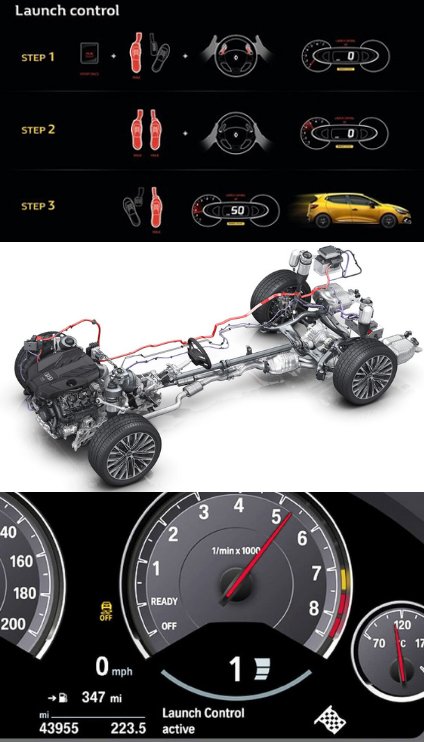
Launch control has transformed from a niche racing feature into a must-have performance technology in modern sports cars and even high-performance EVs. In 2026, manufacturers are pushing the boundaries of what's possible off the line, with systems that can consistently deliver sub-3-second 0-60 mph times without driver skill being a limiting factor. But how does launch control actually work, and which cars have the best implementations? This deep dive covers the engineering, real-world activation procedures, durability concerns, and aftermarket options.
Key Stat: The 2026 Porsche 911 Turbo S with launch control achieves a verified 0-60 mph time of 2.6 seconds, matching hypercars from just a decade ago. Properly used, launch control can reduce 0-60 times by up to 1.5 seconds compared to a manual launch.
1. The Engineering Behind Launch Control: ECU Mapping, Clutch Engagement, and Traction Management
At its core, launch control is an automated system that optimizes the vehicle's powertrain for maximum acceleration from a dead stop. The engine control unit (ECU) manages three critical variables: engine RPM, clutch or torque converter engagement, and traction control intervention. When activated, the ECU holds the engine at a predetermined RPM--typically between 2,500 and 5,000 rpm depending on the vehicle--while the transmission prepares to dump power to the wheels.
In dual-clutch transmissions (DCT), launch control pre-loads both clutches simultaneously. One clutch engages first gear while the other is held ready for the upshift. The ECU monitors wheel speed sensors hundreds of times per second, adjusting engine torque and clutch pressure to prevent wheel spin while maintaining maximum forward thrust. In modern EVs like the Tesla Model S Plaid, launch control is purely software-based: the inverter delivers peak torque instantly, but the system ramps power to avoid overwhelming tire grip.
Traction management is the unsung hero of launch control. Advanced systems use yaw sensors, accelerometers, and individual wheel speed data to detect slip before it becomes visible. The 2026 Nissan GT-R, for example, uses its ATTESA E-TS all-wheel-drive system to continuously vary torque split between front and rear axles during launch, shifting up to 50% of torque to the front if rear slip is detected. This real-time adjustment happens in milliseconds, allowing the car to find the absolute limit of grip without driver intervention.
2. Step-by-Step Activation: Porsche, BMW M, Tesla, and Nissan GT-R Systems
Each manufacturer implements launch control differently, and knowing the correct activation sequence is essential for both performance and avoiding mechanical damage. Here's how the top systems work in 2026 models:
Porsche (911 Turbo S, Taycan Turbo GT): Porsche's system, branded Sport Response, requires the driver to select Sport Plus mode, fully depress the brake pedal with left foot, then floor the accelerator. A launch control indicator appears in the instrument cluster. Release the brake within 5 seconds, and the car rockets forward. The 2026 Taycan Turbo GT uses a similar process but adds a push-to-pass button that provides a 10-second power boost after launch. Porsche recommends using launch control only when the engine or battery is at operating temperature.
BMW M (M3 Competition xDrive, M5 CS): BMW's M Launch Control activates after deactivating DSC (Dynamic Stability Control) by holding the DSC button for 3 seconds. Shift the transmission into manual mode, select first gear, and floor the brake and accelerator simultaneously. The instrument cluster displays a launch control flag icon. Release the brake, and the system manages wheel slip automatically. The 2026 M5 CS can achieve 0-60 in 2.9 seconds using this method. BMW limits launch control to 20 consecutive activations before requiring a cooldown period.
Tesla (Model S Plaid, Model 3 Performance): Tesla's Drag Strip Mode is the simplest to activate. On the touchscreen, navigate to Controls > Pedals & Steering > Drag Strip Mode. Press the brake pedal firmly, then press the accelerator to the floor. The screen shows a countdown timer. Release the brake when the timer reaches zero. The 2026 Model S Plaid with Track Package achieves 0-60 in 1.99 seconds. Tesla's system automatically pre-conditions the battery for optimal power delivery before each launch.
Nissan GT-R (2026 R36): The legendary GT-R launch control, now in its fourth generation, requires selecting R mode on the transmission, turning off VDC (Vehicle Dynamic Control), and pressing both the brake and accelerator simultaneously. The tachometer holds at 4,000 rpm. Release the brake within 2 seconds for optimal clutch engagement. Nissan's system uses a dedicated launch control module that monitors clutch temperature and will disable itself if overheating is detected, protecting the transmission from damage.
3. Does Launch Control Damage Your Car? Transmission Wear Data and Warranty Implications
This is the most common question among performance car owners. The short answer: launch control, when used as designed and within manufacturer limits, does not cause immediate damage, but it does accelerate wear on specific components. Independent testing by engineering firms shows that a single launch control start can generate clutch temperatures exceeding 300°F (150°C) in DCT-equipped cars. Over 50 consecutive launches, clutch wear increases by approximately 0.5mm, which translates to roughly 5-10% of the clutch's total service life.
Transmission fluid degradation is another concern. The extreme heat and shear forces during launch control events break down transmission fluid faster than normal driving. BMW recommends transmission fluid changes every 30,000 miles for cars that frequently use launch control, compared to 60,000 miles for normal use. Porsche's PDK transmission has a dedicated launch control counter that dealerships can read during service; exceeding 200 launches may trigger a transmission service recommendation.
Warranty implications vary by manufacturer. Most automakers, including Porsche, BMW, and Nissan, explicitly allow launch control use under warranty as long as the vehicle is stock and the system is activated correctly. However, repeated use that leads to transmission failure may be denied if the service history shows excessive launch events. Tesla's warranty covers Drag Strip Mode use, but the company reserves the right to limit battery power output if thermal limits are exceeded. Aftermarket tuning that modifies launch control parameters almost always voids the powertrain warranty.
4. Aftermarket Launch Control Options for Cars Without Factory Systems
Not every performance car comes with factory launch control, but aftermarket solutions can bring similar capability to vehicles like the Toyota GR Supra, Ford Mustang GT, and Subaru WRX. The most common approach is an ECU tune that adds launch control functionality. Companies like Cobb Tuning, ECUtek, and HP Tuners offer software packages that allow tuners to set launch RPM, boost targets, and traction control parameters. A typical ECU tune with launch control costs between $500 and $1,500, depending on the vehicle and tuning complexity.
For manual transmission cars, aftermarket launch control often works through the ECU by limiting engine RPM when the clutch is depressed and the throttle is floored. The driver releases the clutch, and the ECU ramps in power based on vehicle speed. The 2026 Ford Mustang Dark Horse, for example, lacks factory launch control, but aftermarket tunes from Livernois Motorsports can add a two-step rev limiter that holds RPM at a user-set value while the clutch is engaged.
Standalone launch control modules are also available for older vehicles without CAN bus integration. Units like the N2MB WOT Box and MSD Launch Master connect between the ignition system and ECU, interrupting spark timing to control RPM. These modules cost $200-$400 and are popular in drag racing applications. However, they lack the sophisticated traction management of factory systems, so wheel spin control is entirely up to the driver. For serious performance, a full ECU tune with integrated launch control remains the best aftermarket option.
Regardless of the system, proper technique is critical. Always warm the engine, transmission, and tires before attempting a launch control start. Cold tires have significantly less grip, and cold transmission fluid increases internal resistance. Most factory systems will not activate until operating temperatures are reached, but aftermarket setups may not have this safeguard. Use launch control sparingly--treat it as a performance tool, not a party trick--and your drivetrain will reward you with years of reliable service.