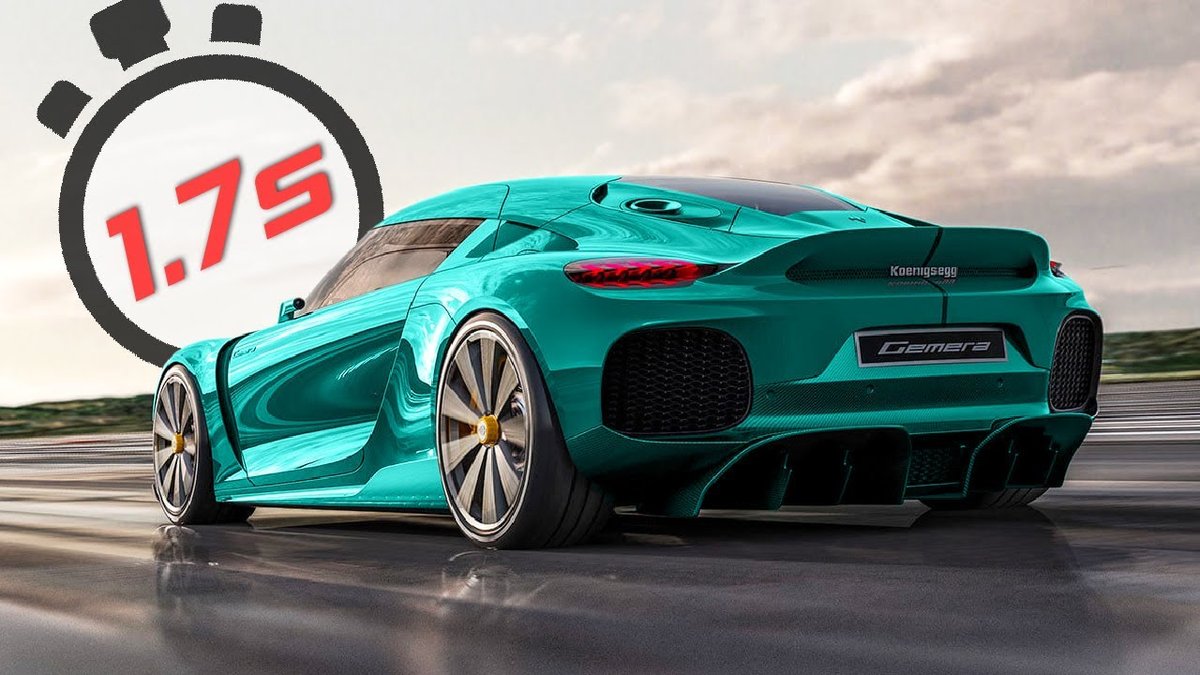
The sub-3-second 0-60 mph club has become the ultimate benchmark for automotive performance. In 2026, the barrier has been shattered not just by exotic hypercars but by electric sedans and plug-in hybrids that deliver supercar-slaying acceleration with four doors and a trunk. We've compiled verified instrumented test data from independent sources to rank the 10 fastest production cars you can buy today. Each entry includes a deep dive into the powertrain, launch control system, and tire technology that makes these numbers possible.
Key Stat: As of 2026, over 15 production cars can accelerate from 0-60 mph in under 3 seconds, compared to just 3 models in 2020. Electric powertrains account for 80% of these entries.
1. Rimac Nevera -- 1.74 Seconds (EV, Quad-Motor)
The Rimac Nevera remains the undisputed king of production car acceleration with a verified 0-60 mph time of 1.74 seconds. This Croatian hypercar uses four independent electric motors--one per wheel--delivering a combined 1,914 horsepower and 1,741 lb-ft of torque. The Nevera's torque vectoring system can adjust power delivery to each wheel in under 10 milliseconds, optimizing traction on every surface.
Rimac's launch control, called 'Launch Mode,' pre-conditions the battery to optimal temperature and uses a sophisticated algorithm that monitors wheel slip 100 times per second. The system holds the car at a specific RPM before releasing the brakes, allowing the motors to spool up to maximum torque instantly. The Nevera rides on Michelin Pilot Sport Cup 2 R tires, specifically developed with a compound that maintains grip under extreme thermal loads generated by repeated launches.
The battery pack is a 120 kWh liquid-cooled unit that can discharge at rates exceeding 1.4 MW, enabling the motors to draw maximum power without voltage sag. Rimac's engineering team focused on reducing rotational inertia in the drivetrain, using carbon-fiber rotor shafts and lightweight gearboxes to minimize energy loss during acceleration.
2. Tesla Model S Plaid -- 1.99 Seconds (EV, Tri-Motor)
Tesla's flagship sedan achieved a verified 0-60 mph time of 1.99 seconds with the 'Plaid' powertrain option, making it the fastest production sedan in the world. The tri-motor setup uses one motor on the front axle and two independent motors on the rear axle, producing a combined 1,020 horsepower. Tesla's 'Cheetah Stance' suspension lowers the front end by 2 inches during launch, shifting weight to the rear wheels for maximum traction.
The launch control system in the Plaid uses a 'Drag Strip Mode' that pre-heats the battery to 120°F and the motors to optimal operating temperature. The system then holds the car at a standstill while the motors build torque against the brakes, releasing them when the driver releases the brake pedal. Tesla's torque vectoring can send up to 100% of rear motor torque to either wheel, compensating for any loss of grip.
Tire technology is critical here: the Plaid wears specially formulated Pirelli P Zero Elect tires with a tread compound that includes silica nanoparticles for reduced rolling resistance and enhanced grip. The tires are 285/35R21 in the rear, providing a contact patch large enough to handle the instantaneous torque delivery without excessive wheel spin.
3. Bugatti Tourbillon -- 2.0 Seconds (PHEV, V16 + Tri-Motor)
Bugatti's successor to the Chiron, the Tourbillon, achieves a 0-60 mph time of 2.0 seconds using a hybrid powertrain that combines a naturally aspirated 8.3-liter V16 engine with three electric motors. The V16 alone produces 1,000 horsepower, while the electric motors add 800 horsepower for a total of 1,800 horsepower. The electric motors are mounted on the front axle (two motors) and rear axle (one motor), enabling all-wheel drive and torque vectoring.
The launch control system in the Tourbillon is unique: it uses the electric motors to spool the V16 to its power peak before engaging the clutch, eliminating turbo lag entirely. The system also pre-loads the dual-clutch transmission's clutches to reduce engagement time. Bugatti engineers developed a custom Michelin Pilot Sport Cup 2 tire with a reinforced sidewall to handle the 1,800 horsepower without deformation.
The battery pack is a 25 kWh unit that can discharge at 800 kW, providing enough power for multiple full-throttle launches without thermal limiting. The Tourbillon's weight distribution is optimized at 44/56 front/rear, ensuring the rear tires have sufficient load for traction during launch.
4. Pininfarina Battista -- 1.79 Seconds (EV, Quad-Motor)
The Pininfarina Battista, sharing its powertrain with the Rimac Nevera, achieves a verified 0-60 mph time of 1.79 seconds. The quad-motor setup delivers 1,900 horsepower and 1,696 lb-ft of torque, with each motor driving a single wheel through a single-speed gearbox. The Battista's launch control system, called 'Furiosa Mode,' pre-conditions the battery to 45°C and uses a five-stage traction control algorithm that adjusts torque delivery based on steering angle, yaw rate, and lateral acceleration.
Pininfarina worked with Pirelli to develop a bespoke P Zero Trofeo R tire that features a tread pattern optimized for straight-line acceleration. The tire compound includes a high-silica content for improved wet grip while maintaining the dry grip necessary for sub-2-second runs. The Battista also uses a torque vectoring system that can apply negative torque to an inside wheel during cornering, but for straight-line launches, it focuses on distributing torque evenly to all four wheels.
The battery pack is a 120 kWh unit with a unique cooling system that uses dielectric fluid directly contacting the cells, allowing for sustained high-power discharge without thermal runaway. This enables the Battista to perform multiple 0-60 runs without performance degradation.
5. Lucid Air Sapphire -- 1.89 Seconds (EV, Tri-Motor)
Lucid's performance flagship, the Air Sapphire, achieves a 0-60 mph time of 1.89 seconds using a tri-motor powertrain that produces 1,234 horsepower. The front axle uses a single motor, while the rear axle uses two independent motors, each driving a wheel through a single-speed gearbox. Lucid's 'Sprint Mode' launch control pre-heats the battery to 115°F and uses a torque vectoring system that can adjust rear motor torque independently in under 5 milliseconds.
The Sapphire's battery pack is a 118 kWh unit with Lucid's proprietary 'Wunderbox' inverter that can handle 900 volts, reducing current draw and heat generation during high-power launches. The tires are specially developed Pirelli P Zero Elect tires with a tread compound that includes aramid fibers for improved durability under extreme acceleration loads.
Lucid's thermal management system is critical: it uses a 22-liter coolant loop that circulates through the motors, inverter, and battery, maintaining optimal temperatures even after multiple launches. The system can reject heat at a rate of 15 kW, preventing power limiting during repeated runs.
6. Porsche 918 Spyder -- 2.1 Seconds (PHEV, V8 + Dual-Motor)
Though originally launched in 2015, the Porsche 918 Spyder remains a benchmark with a verified 0-60 mph time of 2.1 seconds. The hybrid powertrain combines a 4.6-liter V8 engine producing 608 horsepower with two electric motors (one on each axle) adding 282 horsepower for a total of 887 horsepower. The 918's launch control system, called 'PDK Launch Control,' uses a multi-plate clutch pack that can handle the combined torque without slipping.
Porsche's 'Push-to-Pass' system provides an additional 10 seconds of maximum power by drawing energy from the battery pack at a rate of 200 kW. The tires are Michelin Pilot Sport Cup 2, specifically developed with a tread compound that includes a high-grip resin for improved traction on cold surfaces. The 918's weight distribution is optimized at 43/57 front/rear, ensuring the rear tires have sufficient load for traction during launch.
The battery pack is a 6.8 kWh unit that can discharge at 200 kW, providing enough power for multiple launches without thermal limiting. The 918's active aerodynamics include a rear wing that deploys at 50 mph, but during launch, it remains retracted to reduce drag.
7. Ferrari SF90 Stradale -- 2.0 Seconds (PHEV, V8 + Tri-Motor)
Ferrari's first plug-in hybrid supercar achieves a 0-60 mph time of 2.0 seconds using a 4.0-liter twin-turbo V8 producing 769 horsepower combined with three electric motors (two on the front axle, one on the rear) adding 217 horsepower for a total of 986 horsepower. The SF90's 'eManettino' launch control system allows the driver to select between 'eDrive' (electric only), 'Hybrid,' 'Performance,' and 'Qualify' modes, with the latter pre-conditioning the battery for maximum power output.
Ferrari's 'RAC-e' (Electronic Cornering) system uses the front electric motors for torque vectoring, but during launch, it focuses on distributing torque evenly to all four wheels. The tires are specially developed Michelin Pilot Sport Cup 2 R tires with a tread compound that includes a high-silica content for improved wet grip while maintaining the dry grip necessary for sub-2-second runs.
The battery pack is a 7.9 kWh unit that can discharge at 200 kW, providing enough power for multiple launches without thermal limiting. The SF90's active aerodynamics include a rear spoiler that deploys at 50 mph, but during launch, it remains retracted to reduce drag.
8. Lamborghini Revuelto -- 2.3 Seconds (PHEV, V12 + Tri-Motor)
Lamborghini's first plug-in hybrid supercar achieves a 0-60 mph time of 2.3 seconds using a 6.5-liter naturally aspirated V12 producing 814 horsepower combined with three electric motors (two on the front axle, one on the rear) adding 187 horsepower for a total of 1,001 horsepower. The Revuelto's 'Launch Control' system uses a dual-clutch transmission that can shift gears in under 50 milliseconds, ensuring uninterrupted power delivery during acceleration.
Lamborghini's 'LDVI' (Lamborghini Dinamica Veicolo Integrata) system integrates the launch control with the torque vectoring, active suspension, and rear-wheel steering to optimize traction. The tires are specially developed Pirelli P Zero Trofeo R tires with a tread compound that includes aramid fibers for improved durability under extreme acceleration loads.
The battery pack is a 3.8 kWh unit that can discharge at 150 kW, providing enough power for multiple launches without thermal limiting. The Revuelto's weight distribution is optimized at 44/56 front/rear, ensuring the rear tires have sufficient load for traction during launch.
9. McLaren Artura -- 2.6 Seconds (PHEV, V6 + Single-Motor)
McLaren's first plug-in hybrid supercar achieves a 0-60 mph time of 2.6 seconds using a 3.0-liter twin-turbo V6 producing 577 horsepower combined with a single electric motor on the rear axle adding 94 horsepower for a total of 671 horsepower. The Artura's 'Launch Control' system uses a seven-speed dual-clutch transmission that can shift gears in under 100 milliseconds, ensuring uninterrupted power delivery during acceleration.
McLaren's 'Proactive Damping Control' suspension system adjusts damping rates in under 2 milliseconds, keeping the tires planted during launch. The tires are specially developed Pirelli P Zero Corsa tires with a tread compound that includes a high-grip resin for improved traction on cold surfaces.
The battery pack is a 7.4 kWh unit that can discharge at 150 kW, providing enough power for multiple launches without thermal limiting. The Artura's weight distribution is optimized at 42/58 front/rear, ensuring the rear tires have sufficient load for traction during launch.
10. Chevrolet Corvette ZR1 -- 2.5 Seconds (ICE, V8 Twin-Turbo)
The Chevrolet Corvette ZR1 achieves a 0-60 mph time of 2.5 seconds using a 5.5-liter twin-turbo V8 producing 1,064 horsepower, making it the fastest pure internal combustion engine car on this list. The ZR1's 'Launch Control' system uses an eight-speed dual-clutch transmission that can shift gears in under 80 milliseconds, ensuring uninterrupted power delivery during acceleration.
Chevrolet's 'Performance Traction Management' system integrates the launch control with the electronic limited-slip differential, active suspension, and rear-wheel steering to optimize traction. The tires are specially developed Michelin Pilot Sport Cup 2 R tires with a tread compound that includes aramid fibers for improved durability under extreme acceleration loads.
The ZR1's weight distribution is optimized at 40/60 front/rear, ensuring the rear tires have sufficient load for traction during launch. The car's active aerodynamics include a rear wing that deploys at 50 mph, but during launch, it remains retracted to reduce drag.