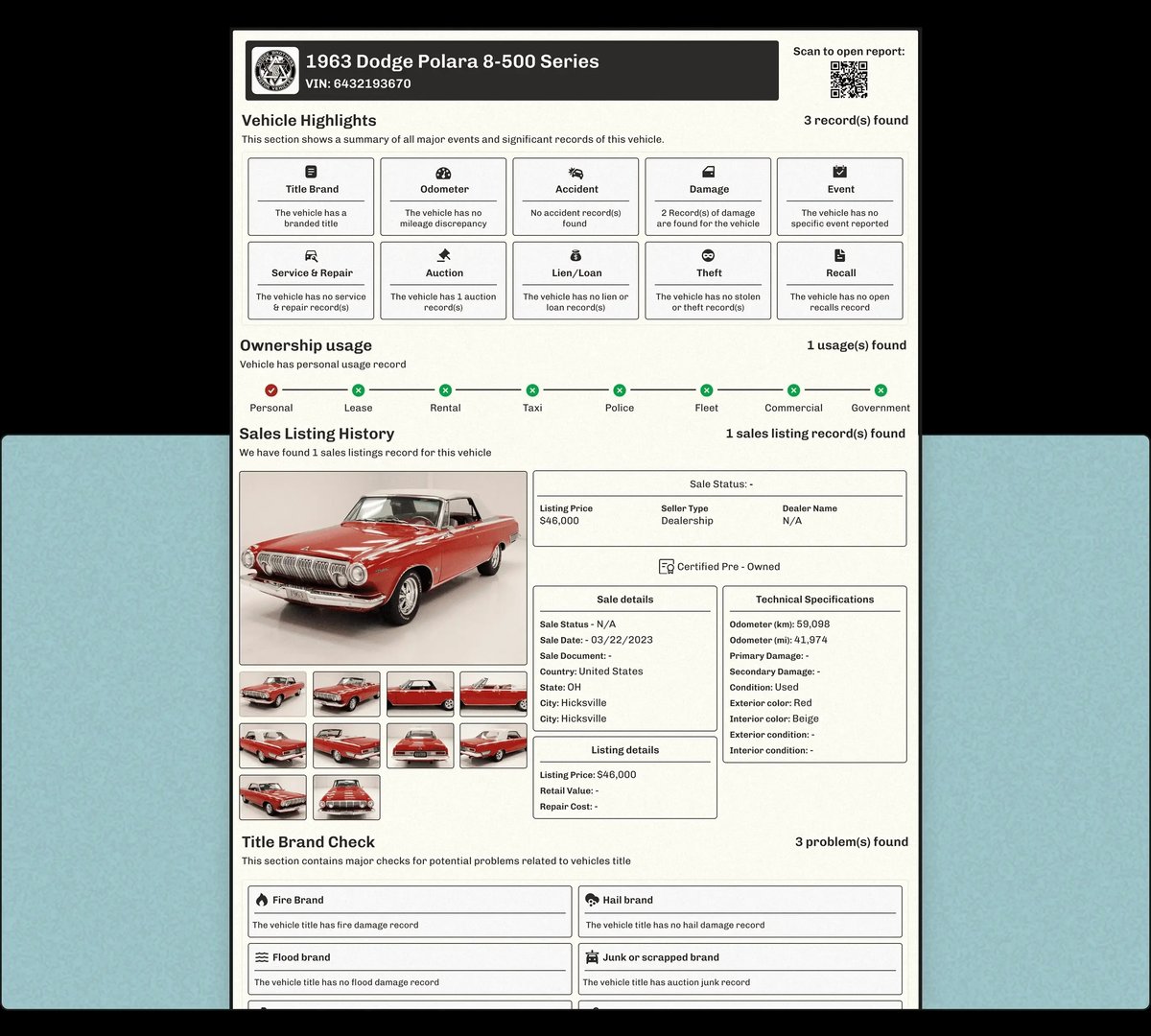
Buying a used car is a financial chess match. The seller knows more than you do -- unless you arm yourself with a vehicle history report. But here's the catch: most buyers glance at the summary and miss the real dealbreakers buried in the data. A clean-looking report can hide structural damage, odometer fraud, or a flood-drenched engine bay. This guide teaches you exactly how to read a used car history report like a professional inspector, so you never overpay for someone else's problem.
According to the National Highway Traffic Safety Administration (NHTSA), over 450,000 vehicles with tampered odometers enter the used market each year, costing buyers an average of $4,000 in hidden depreciation and repair costs.
CarFax vs AutoCheck: What Each Report Actually Covers
Not all history reports are created equal. CarFax is the industry standard, pulling data from 120,000+ sources including state DMVs, insurance companies, auto auctions, and service shops. It excels at documenting ownership history, title brands, and service records. However, CarFax has a blind spot: it often misses accidents that were paid for out-of-pocket without an insurance claim. If a fender bender was fixed at a private shop and never reported, CarFax won't show it.
AutoCheck, owned by Experian, uses a different scoring system called the AutoCheck Score (1-100). It pulls from similar sources but includes auction data more aggressively. AutoCheck is better at flagging vehicles that have been sold multiple times at auction -- a red flag for potential flood or rental fleet abuse. Its scoring algorithm weighs accident history, title brands, and mileage consistency into a single number. A score below 70 should raise immediate concern.
For maximum protection, pull both reports. CarFax gives you the cleanest ownership timeline; AutoCheck reveals auction patterns and structural damage that CarFax sometimes misses. If a seller only provides one report, ask why. A dealer hiding an AutoCheck score of 45 is a dealer you walk away from.
Accident History Tiers: Minor Fender Bender vs Structural Damage
Every accident is not equal. History reports typically classify accidents into three tiers: minor, moderate, and severe. A minor accident (tier 1) involves cosmetic damage -- a scratched bumper, a dented door, a broken taillight. These repairs cost under $1,500 and rarely affect the vehicle's structural integrity or resale value. If the report shows only one minor accident with a clean repair record, it's usually not a dealbreaker.
Moderate accidents (tier 2) involve damage to panels, suspension components, or the frame's outer edges. Think of a collision that requires replacing a fender, hood, or door. These repairs can cost $3,000-$8,000. The key question: was the repair done at a certified body shop with OEM parts? If the report shows a moderate accident followed by a gap in service history, the repair quality is unknown. That's a yellow flag.
Severe accidents (tier 3) are structural. The report will often say "structural damage" or "frame damage." This means the vehicle's unibody or frame rails were bent or cracked. Even after professional repair, the car's crash safety is compromised. A vehicle with structural damage loses 30-50% of its resale value and may never align properly. If you see this on any report, walk away. No exception. The risk of future suspension wear, tire cupping, and hidden rust is too high.
Title Brands Explained: Salvage, Rebuilt, Flood, Lemon -- and Why They Matter
A title brand is a permanent legal label that tells you the vehicle's dark history. Salvage title means an insurance company declared the car a total loss -- repair costs exceeded 75-80% of its pre-accident value. This could be from a crash, flood, fire, or theft recovery. A salvage vehicle cannot be legally driven on public roads until it passes a state inspection and receives a rebuilt title.
Rebuilt title means the salvage vehicle was repaired, inspected, and deemed roadworthy. But here's the truth: rebuilt vehicles often have hidden issues. The repair may have used aftermarket or junkyard parts. Airbags might have been replaced with dummy units. A 2023 study by CarFax found that rebuilt-title vehicles are 3.5 times more likely to have mechanical problems within the first year compared to clean-title cars. If you're considering a rebuilt title, get a pre-purchase inspection from a mechanic who specializes in collision repair.
Flood title is the most dangerous. Water damage can destroy electrical systems, corrode wiring harnesses, and cause mold that triggers respiratory issues. Flood cars often look clean after detailing, but the damage is internal. A flood title should be an automatic dealbreaker unless you're buying a parts car. Lemon title means the vehicle had a recurring defect that the manufacturer couldn't fix after multiple attempts. These cars often have chronic transmission, engine, or electrical issues. Avoid them unless you enjoy legal battles.
Odometer Rollback Signs and Service History Gaps That Signal Trouble
Odometer fraud is more common than you think. A rollback of 50,000 miles can increase a car's perceived value by $5,000-$10,000. History reports flag odometer inconsistencies by comparing mileage readings from different sources -- emissions tests, oil changes, tire rotations, and state inspections. If the report shows a mileage drop (e.g., 80,000 miles in 2023 then 65,000 miles in 2024), that's a clear rollback. But sometimes the fraud is subtler: a single missing year of mileage data.
Service history gaps are equally telling. A vehicle that went 30,000 miles without an oil change record likely missed critical maintenance. Look for consistent entries every 5,000-7,500 miles. Gaps of more than 15,000 miles suggest the owner deferred maintenance. Also check for timing belt replacements (every 60,000-100,000 miles), transmission fluid changes, and brake fluid flushes. If the report shows a timing belt was never replaced on a 120,000-mile car, budget $1,000-$1,500 for immediate replacement.
One more red flag: multiple owners in a short period. A car that had three owners in two years is a car that someone kept passing along. Combine that with a service history gap and you have a recipe for hidden mechanical failure. Always cross-reference the mileage on the report with the physical odometer and the wear on the brake pedal, steering wheel, and driver's seat. If the car shows 40,000 miles but the driver's seat is heavily worn, something doesn't add up.
Mastering these four areas -- report types, accident tiers, title brands, and odometer integrity -- transforms you from a casual buyer into an informed negotiator. The next time you see a used car listing, pull the report first. Read every line. And when you spot a dealbreaker, walk away. There's always another car.